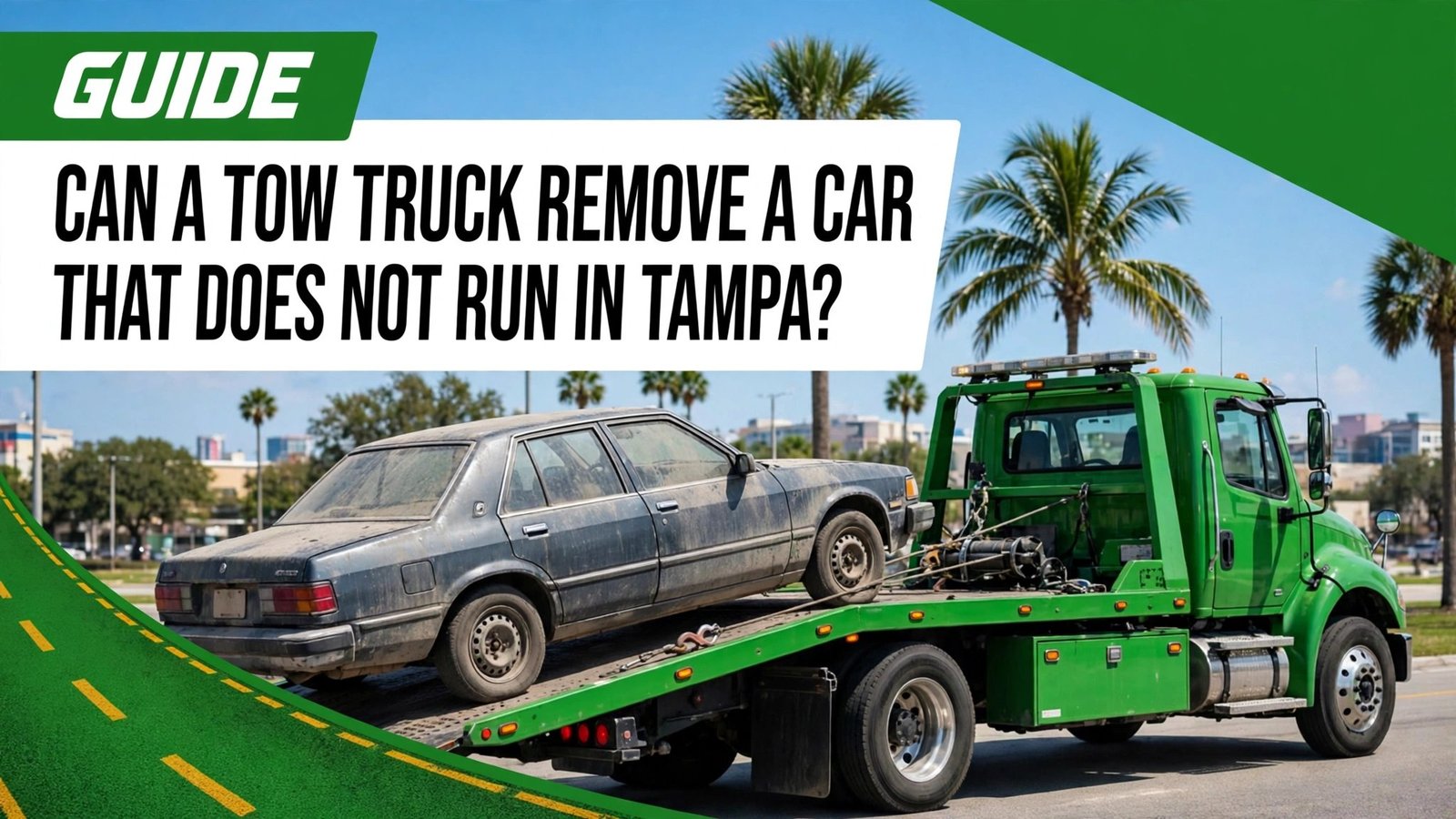
Yes, a tow truck can remove a car that does not run in Tampa, in most cases. The right truck is a flatbed with a winch, and the driver pulls the car onto the bed. A car that does not run still sells, still loads, and still leaves your driveway the same day when the buyer knows the condition before the truck arrives. The problems start when the car cannot roll, cannot steer, or has no wheels. This guide explains how a tow truck removes a car that does not run, what to tell the buyer first, what changes the price, and when the answer is no.
Short Answer: Yes, in Most Cases — If the Right Truck Comes
Most non-running cars in Tampa leave on a flatbed. A car that does not run needs that winch because it cannot drive itself onto the bed, and a standard tow truck without one cannot do the job. For the full service, see Cash Four Car Tampa’s junk car removal service.
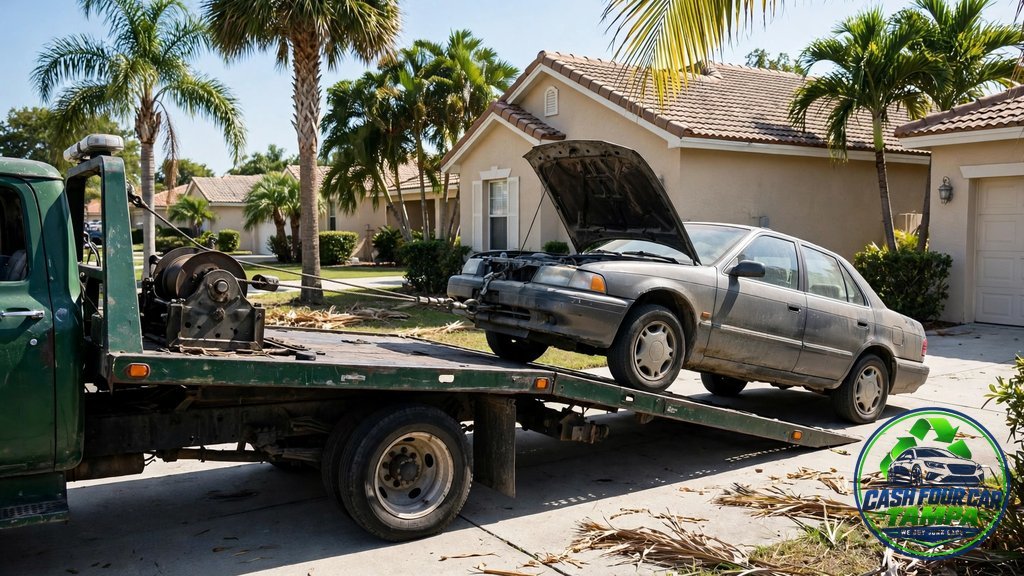
What Does Not Run Actually Means: Engine, Battery, Transmission, Brakes, Steering
“Does not run” covers five different problems, and each one changes the pickup. A dead battery is the easiest case: a car that does not run because the battery is flat still rolls, steers, and brakes, so the driver winches it on and off in minutes. A seized engine or a dead transmission is different, because the car cannot move under its own power, yet it still rolls on its wheels.
Cases Where the Answer Is Yes Right Away
The answer is yes right away when the car rolls, steers, and sits on four inflated tires with clear access in front of it. A car that does not run after a dead battery, a failed starter, a bad alternator, or a seized engine still loads cleanly on a flatbed as long as the wheels turn and the parking brake releases.
Cases Where the Answer Is Not That Way or Not Today: Dragging, No Wheels, Unsafe or Unstable, No Access
A car with no wheels cannot roll onto a bed, and a car that does not run with a broken axle or a collapsed suspension may not sit straight enough to load. The answer is not today when the car is unsafe or unstable, for example after a flood, a fire, or a crash that left the frame twisted. Dragging a car that cannot roll damages the driveway and the car, and no access can mean the truck comes back another day.
How a Tow Truck Removes a Non-Running Car
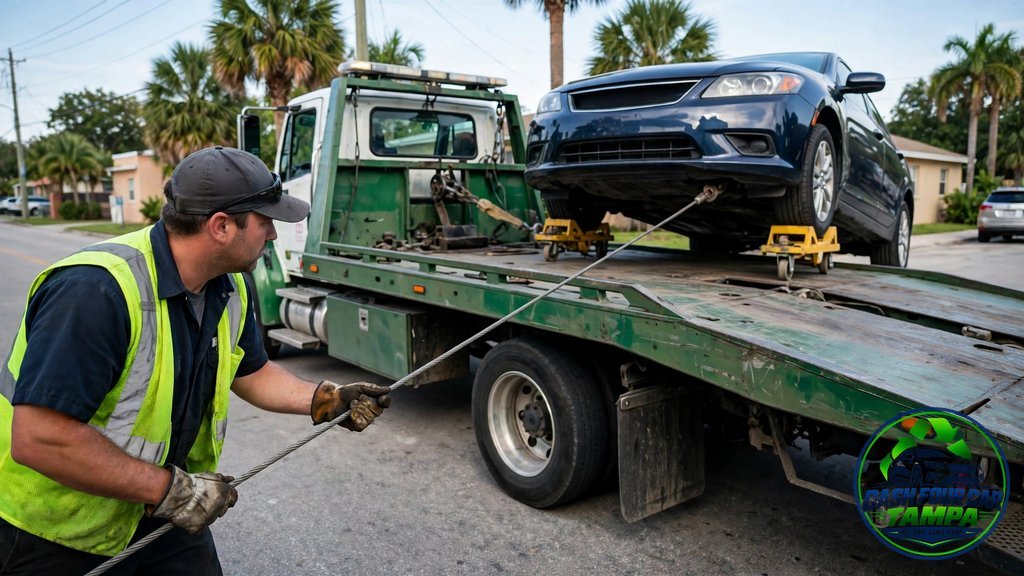
A flatbed does the heavy work, and the driver does the thinking. When a car that does not run cannot roll, the driver adds dollies or skates under the wheels that will not turn, so the car slides instead of dragging. If you want the full step-by-step, the guide to how junk car removal works walks through the whole pickup from the first call to the cash in hand.
| Equipment | What it does | When it is used |
|---|---|---|
| Flatbed or rollback and winch | Tilts the bed to the ground and pulls the car up on a steel cable | Most non-running cars that still roll |
| Wheel dollies | Small wheeled cradles that sit under two wheels and let them roll | Locked wheels, flat tires, or a stuck parking brake |
| Go-jacks and skates | Lift one wheel off the ground on small rollers so the car can be pushed or winched sideways | Missing wheels, tight garages, and cars that must move sideways |
| Wheel-lift | Lifts one axle off the ground and tows the car on its other two wheels | Short moves of cars that roll and steer, never for all-wheel drive |
Flatbed or Rollback and Winch Loading
Flatbed loading is simple and it is the safest way to move a car that does not run. The driver backs up to the car, tilts the bed to the ground, and hooks the winch cable to a tow hook or a solid frame point. The winch pulls the car up the bed at a steady speed while the driver watches the wheels and the cable.
Dollies, Skates and Go-Jacks for Locked, Flat or Missing Wheels
When a wheel will not turn, the driver stops trying to roll it and puts a dolly or a skate under it instead. Go-jacks and skates do the same job for a missing wheel, lifting the hub off the ground so a car that does not run can still be pushed or winched onto the bed. The video below shows a stripped car with no wheels being loaded onto a flatbed, the same loading problem a car that does not run with missing wheels creates here.
Wheel-Lift vs Dragging: When Each Is Wrong
A wheel-lift truck picks up one axle and tows the car on its other two wheels. That works for a short move when a car that does not run still rolls and steers, and when the lifted axle is the driven one, because a driven axle turning with the engine off can overheat a transmission that has no pump running. Dragging is wrong whenever the wheels cannot turn, because it gouges the driveway and can snap a brake line or a suspension arm.
What to Tell the Buyer Before the Truck Arrives
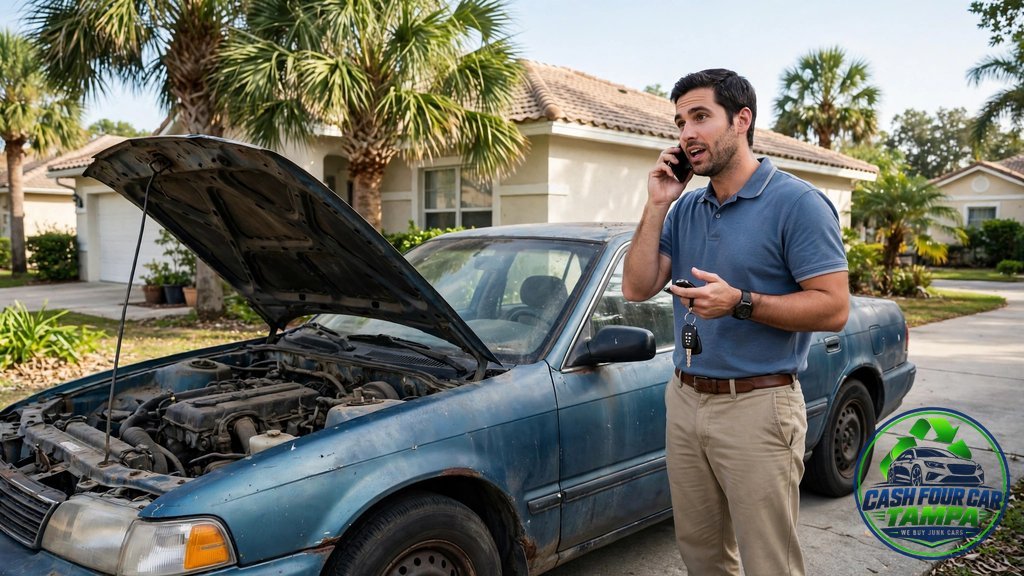
The booking call decides whether the right truck shows up. A car that does not run can need a flatbed, dollies, skates, a longer winch cable, or two people instead of one, and the buyer can only send the right gear if you describe the car honestly.
Runs, Rolls, Steers, Brakes: The Four Checks
Run through four checks before you call. First, does it run: turn the key and say what happens. Second, does it roll: can you push it a foot in neutral, or do the wheels stay put. Third, does it steer: turn the wheel with the key on and see whether it moves. Fourth, do the brakes work: press the pedal, and check the parking brake releases. A car that does not run but rolls, steers, and brakes is a standard flatbed pickup.
Tyres, Wheels, Keys, Doors and Missing Parts
Next, describe the tires, the wheels, the keys, the doors, and anything missing. Flat tires matter because a tire that holds no air still rolls on its rim for a short winch, while a tire that has come off the rim does not. Keys matter because the driver may need them to unlock the steering of a car that does not run, and doors matter because a locked car cannot be shifted from inside.
Location and Access: Garage, Gate, Apartment, Soft Ground, Winch Distance
Finally, describe where the car sits. A car that does not run in an open driveway is the easiest pickup in Tampa. A car in a closed garage needs the door open and enough room in front for the bed to tilt down, which takes about a truck length plus the bed. A gated community or an apartment lot needs the gate code and a spot the truck can reach, and soft ground after rain can sink a flatbed.
What Affects Price and Equipment
A non-running car is worth what its weight, its parts, and its paperwork add up to, minus what the pickup costs the buyer. A car that does not run but rolls onto a flatbed in ten minutes costs the buyer almost nothing extra. Pricing guides like KBB show what similar cars are worth before the tow is priced in.
Rolling vs Non-Rolling, and Why Equipment Changes
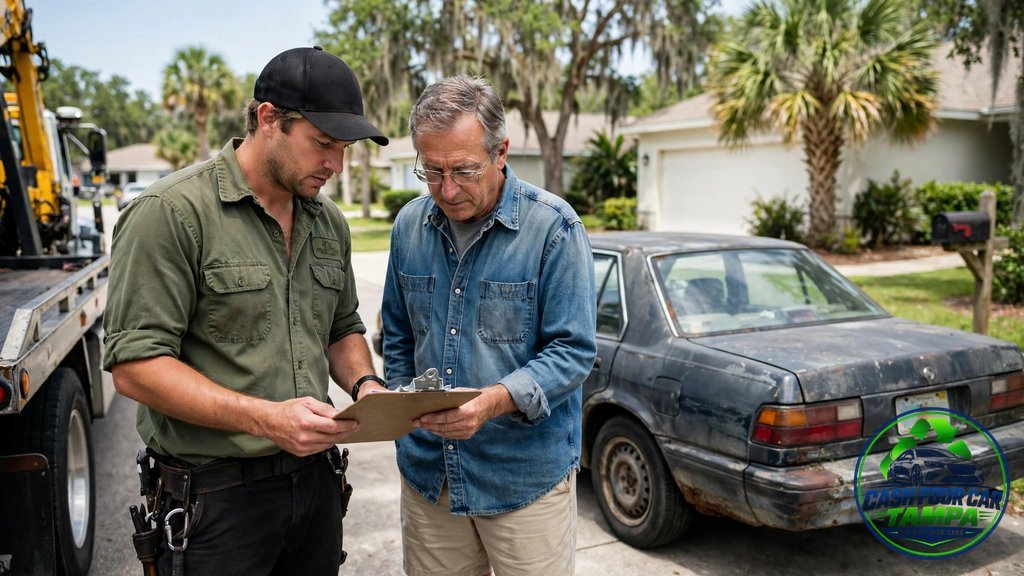
Rolling is the line between a simple pickup and a recovery job. A car that does not run but rolls freely loads on a flatbed with a winch and one driver, and the buyer prices it as a standard tow. A car that does not run and will not roll needs dollies under the locked wheels or skates under the missing ones, plus a jack, extra straps, and more time and labor on site.
Distance, Size, Access and Extra Labour: Paid Tow vs Free Junk-Buyer Pickup
A car that does not run ten miles from the yard costs the buyer a short drive and a standard load. A junk buyer pays for the tow out of the car’s value, so the pickup is free when the car is worth more than the trip. If you want the math behind that trade-off, the guide on whether junk car removal is free explains when the tow is included and when it is not.
Why a Disclosed Condition Should Already Be in Your Quote, and When a Change Is Legitimate
A quote given after a full description should hold at pickup. If you told the buyer the car does not run, the brakes are locked, and one wheel is missing, then the price you were quoted already includes the dollies, the skates, and the extra time. A car that does not run exactly as described leaves no room for a last-minute cut.
Paperwork for a Non-Running Car in Tampa
A car that does not run needs the same paperwork as a car that does. FLHSMV is the official source for the forms and lists the title, registration, and Notice of Sale steps in one place.
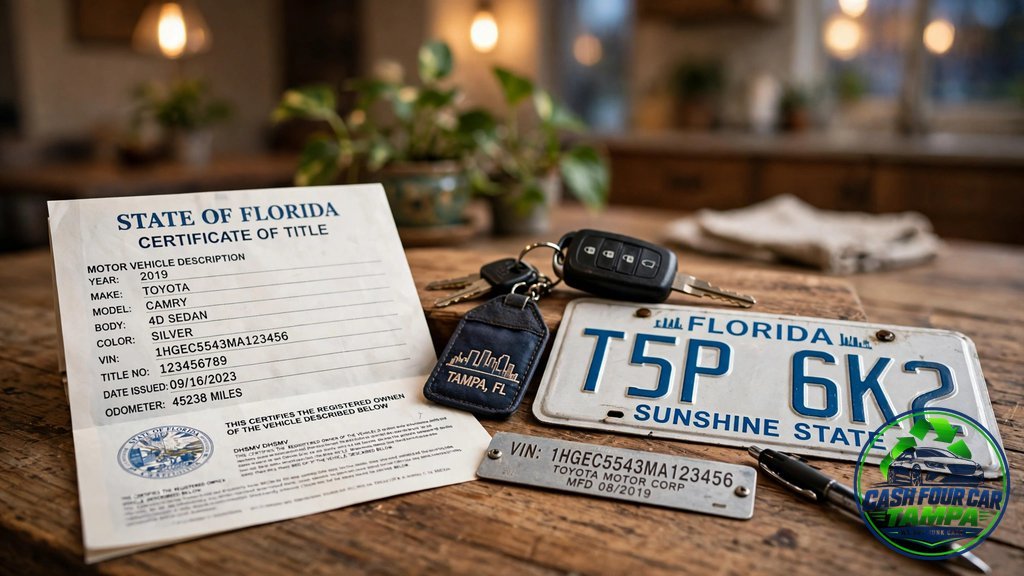
Title, Photo ID and VIN: What to Have Ready
Have three things ready before the truck arrives: the Florida certificate of title in your name, a photo ID, and the VIN. The driver checks that the name on the title matches your ID and that the VIN on the title matches the plate on the dashboard or the door jamb of the car that does not run in your driveway.
Plates: Remove, Transfer or Surrender
Take the plates off before the car leaves. A car that does not run still carries your plate, and the plate stays your responsibility until you deal with it. Florida gives you three choices: transfer the plate to another car you own, keep it, or surrender it to the tax collector’s office. Surrender the plate before you cancel the insurance: a registered plate with no insurance behind it can trigger a suspension, with reinstatement fees starting at $150.
Notice of Sale Within 30 Days, Plus Link-Outs to Derelict and Duplicate Title
File the Notice of Sale within 30 days of the sale. Florida Statute §319.22 puts that duty on the seller, and the form is HSMV 82050. A car that does not run is still your car on paper until that notice is filed, so do it the same week, not the same month. If you want the no-title rules in full, the guide on how to sell a junk car without a title walks through both routes and when each one applies. With no title, the duplicate-title form is HSMV 82101, and the derelict route for a car ten model years or older worth under $1,000 is form HSMV 82137.
Red Flags at Pickup
Most pickups go smoothly, but a car that does not run is an easy target for a price cut at the curb, because the seller cannot drive it away to another buyer.
Invented Non-Running or Towing Fees and Pickup-Day Price Cuts
Watch for fees that appear only at pickup. A car that does not run was already described on the phone, so a “non-running fee,” a “winch fee,” or a “towing fee” added at the curb is an invented charge, not a real cost. A pickup-day price cut with no reason is the same trick in different clothes: the number you were quoted is the number that holds.
Dragging, Pressure Tactics and Pay-After-Towing
Dragging, pressure, and pay-after-towing are three ways a bad pickup goes wrong. Dragging a car that does not run on locked wheels or on its frame damages the car and the concrete, and a driver who suggests it is cutting corners. Pressure tactics sound like “the truck leaves in five minutes” or “take it or I go,” and they are designed to stop you thinking. Pay-after-towing means the driver loads the car and promises to pay later, leaving you with no car and no cash.
Blank Titles, No Paperwork and Broker Pass-Through: Who Is Actually Buying?
Ask who is actually buying your car. A car that does not run sold to a broker is another trap, because the broker passes the car to a second buyer who may pay less than the first quote, and the price can change hands twice before you see a dollar. A driver who asks you to sign a blank title, or who has no paperwork at all, is not running a straight sale.
Towing a Non-Running Car in Tampa and Hillsborough County
Tampa is a big county with long distances between neighborhoods, and a car that does not run in New Tampa is a different trip from one in South Tampa. A car that does not run is a Tampa problem with Tampa causes, and the sections below keep it local.
Neighbourhoods and ZIPs Served: Use Only the Coverage the Business Confirms Live
Coverage is confirmed on the call, not from a list on a website. A car that does not run anywhere in Tampa can be quoted the same way, but the pickup is only promised once the buyer confirms your address on the call. Cash Four Car Tampa does not publish a ZIP-by-ZIP coverage list, so this guide does not invent one. Tampa spans ZIP codes from 33602 downtown to 33647 in New Tampa.
Why Tampa Cars Stop Rolling: Heat, Humidity, Salt Air and Sitting After Storms
Tampa weather kills cars in slow, steady ways. Heat cooks batteries: one that lived through three Tampa summers can die overnight. Humidity corrodes wiring and connectors, so a car that does not run after a wet season often has a green crust on a terminal rather than a dead engine. Salt air from the bay rusts brake lines and seizes calipers, which is why a car that does not run near the coast often has locked brakes.
HOA and Code Pressure: Context Only, Not Legal Advice
A car that does not run in a driveway can draw attention from a homeowners association or from code enforcement, and that pressure is often what pushes a seller to call. This section is context only, not legal advice: HOA rules differ from one community to the next. A car that does not run does not need a lawyer to sell, but if you have a notice with a deadline, tell the buyer the date on the call so the pickup comes first.
Why Tampa Sellers Call Cash Four Car Tampa for a Non-Running Car
Cash Four Car Tampa buys cars that do not run across Tampa Bay, and the pickup is built for them: a flatbed with a winch, free towing, and cash on the spot. A car that does not run does not need to be fixed or washed first, or driven anywhere.

Free Towing, Same-Day Pickup and Cash on the Spot
Free towing means the tow is part of the offer, not a charge on top of it. Same-day pickup often means the truck comes the day you call, and cash on the spot means the driver pays before the car leaves. A car that does not run gets the same three promises as a car that does. Call (813) 321-4445 any day from 7:00 AM to 9:00 PM, and the yard is at 902 N Tampa St, Tampa, FL 33602. With 4.9 out of 5 stars from more than 127 reviews and over 500 cars purchased, the record is public.
How to Get Your Written Net Quote
Getting your written net quote takes one call and two minutes of description. Tell the buyer the year, make, and model, run through the four checks, and describe the tires, the keys, and where the car sits. A car that does not run with a written quote is a car that sells at the number you agreed, and the fastest way to start is to get a quote today.
FAQs: Towing a Car That Does Not Run in Tampa
Three questions come up on almost every call about a car that does not run in Tampa. The answers are short, because the pickup itself is simple once the buyer knows the condition.
Can a Tow Truck Remove a Car With No Wheels in Tampa?
Yes, but not with a standard winch alone. A car that does not run with no wheels needs go-jacks or skates under each missing corner, so the car rolls on small steel wheels instead of its hubs. A car with no wheels at all can still be removed, as long as the buyer knows to bring the skates.
Do I Need Keys for a Non-Running Car Tow?
Usually not, but they help. A car that does not run can be winched onto a flatbed without keys when the steering is unlocked and the transmission is already in neutral. A car that does not run without keys still sells, and the paperwork is the same, title, ID, and VIN, with the keys listed as missing rather than present.
Will Towing a Non-Running Car Cost Extra in Tampa?
It depends on the car and the buyer. A car that does not run but rolls onto a flatbed costs the buyer no more than a running car, so a junk buyer folds the tow into the offer and the pickup is free to you. A car that does not run and needs dollies, skates, or a long trip can cost the buyer more in time and gear, and that can lower the offer, though the tow itself is still not charged as a separate fee.