After selling your car, the work is not over when the buyer drives away. The sale ends your ownership only when the paperwork catches up, and the order matters: plate first, then the Notice of Sale, then insurance, then the car’s accounts. Get the order wrong and tolls or tickets can still land in your name weeks after selling your car. This checklist covers the seven steps in order, what to keep in your file after selling your car, and the red flags that mean the buyer never finished their half of the job.
The Short Answer: Your After-Sale Checklist in the Right Order
The short answer is seven steps, done in order: remove the plate, sign the title over, file the Notice of Sale, move or surrender the plate, cancel or move the insurance, clear SunPass and the car’s accounts, and confirm any loan payoff. Do them in that order after selling your car, and keep a receipt for every step.
The 7 Steps at a Glance: Table and Checklist
The table below is the whole checklist in one place. Work down it in order after selling your car, and check each step off only when you hold the receipt, the copy, or the confirmation. If a step does not apply — no loan, no SunPass, no second car — skip it and move on. Keep the finished checklist with your copy of the bill of sale after selling your car, so the file is complete.
| Step | What to do | When |
|---|---|---|
| 1 | Remove the license plate | Before the car leaves |
| 2 | Sign the title over; keep a signed copy | At handover |
| 3 | File Form HSMV 82050, Notice of Sale | Within 30 days after selling your car |
| 4 | Transfer the plate or surrender it | Same day, at the tax collector |
| 5 | Cancel or move the insurance | Only after the plate step |
| 6 | Remove SunPass; clear toll, parking, and app accounts | Same day |
| 7 | Confirm the loan payoff and lien release | Get it in writing after selling your car |
Why Order Matters More Than Speed: Plate, Then Notice, Then Insurance
Speed helps, but order protects you. The plate comes off first because it is yours, and any toll or ticket tied to it stays yours until it is transferred or surrendered. The Notice of Sale comes next because it tells the state you no longer own the car, and insurance comes last because cancelling it while a plate is still registered can trigger a suspension. Do the steps in order after selling your car.
Private Sale vs Sale to a Licensed Buyer: Who Files What?
In a private sale, you file the Notice of Sale and the buyer files for the new title — neither filing replaces the other. When you sell to a licensed buyer, the dealer exception in §319.22(2)(b) means the notice requirement does not apply, so ask the buyer to confirm in writing that they will file the title work. Keep your copy of the signed title after selling your car — it proves when ownership ended. The full transfer steps are covered in the transfer a car title guide.
Remove Your Plate, Then Transfer or Surrender It
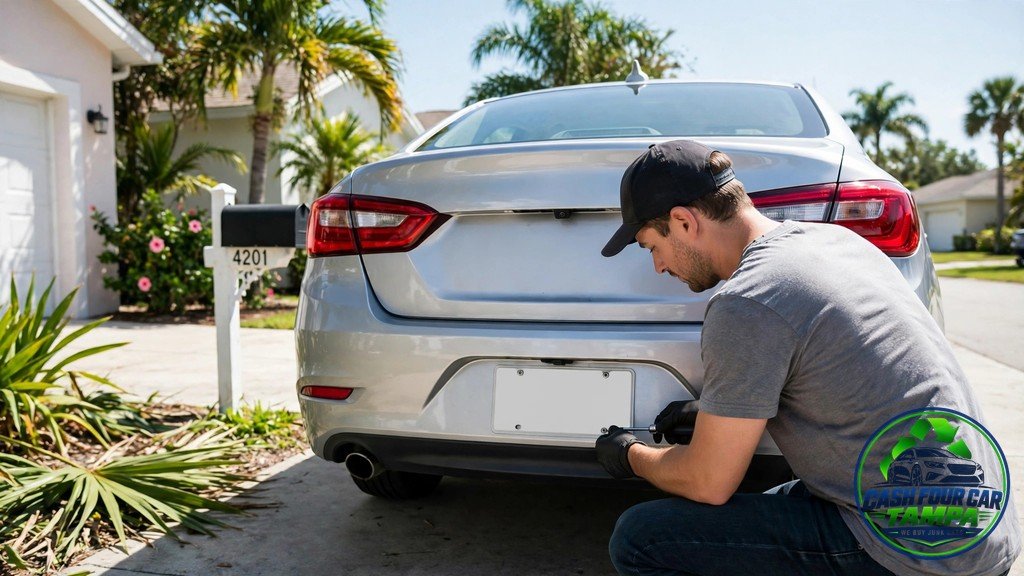
Florida plates belong to you, not to the car, so the plate is the first thing to handle after selling your car. Take it off before the car leaves, then decide whether it moves to your next car or goes back. Either choice ends with a receipt — keep it in your file after selling your car.
Florida Plates Stay With You, Not the Car
In Florida, the license plate stays with the owner when a car changes hands, so the plate on the car you just sold is still yours after selling your car. Never let the buyer drive away with your plate on the car, because tolls and tickets tied to it keep coming back to you. Remove the plate yourself before handover.
Transfer to Your Next Car vs Surrender at the Tax Collector
If you already have a replacement car, the plate can move to it at the Hillsborough County Tax Collector, and the registration follows the plate. If you have no replacement, surrender the plate at the same office and take the surrender receipt before you leave. A transfer after selling your car carries the standard transfer fee at the counter — confirm the amount before you go, because fees change. Decide which route fits before you leave home, so the plate is settled the same day.
Keep the Surrender or Transfer Receipt
The receipt is the proof that the plate is no longer your problem, so file it with the bill of sale after selling your car. If a toll or ticket arrives later with your old plate number on it, the receipt and the Notice of Sale show the date your responsibility ended. Photograph the receipt before you leave the counter, and keep the paper copy with the signed title copy.
File the Notice of Sale Within 30 Days
The Notice of Sale tells the state you no longer own the car, and Florida gives you 30 days to file it after selling your car. It costs nothing extra to file, and it is the single most useful piece of paper in your after-sale file. File it the same day if you can.

What 82050 Is — and What It Does Not Do: It Is Not a Title Transfer
Form HSMV 82050, the Notice of Sale, records the VIN, the buyer’s name and identification, the sale date, and the price, as Florida Statute §319.22 requires. It tells the state the car is no longer yours, so tolls, tickets, and liability stop. What it does not do is transfer the title — only the buyer’s filing for a new title does that — and it does not end your duty to keep the plate step and the insurance step in order after selling your car. File the notice, then keep your copy.
How and Where Tampa Sellers File: Hillsborough Tax Collector
Tampa sellers file the Notice of Sale at the Hillsborough County Tax Collector, the FLHSMV agent for motor vehicle services, or through FLHSMV online services. Bring the VIN, the buyer’s name, the sale date, and the price, and file within 30 days after selling your car. The downtown office is at 601 E Kennedy Blvd, with branches on Falkenburg Road, Hillsborough Avenue, and Westshore Boulevard — confirm the branch handles title work before you go.
The Dealer Exception: Trade-In and Licensed-Buyer Sales
Under §319.22(2)(b), the notice requirement does not apply when you transfer a car title to or by a licensed motor vehicle dealer, or to an insurer that took the car under a policy. That exception covers the notice, not the signature, so the title still has to be signed over and the buyer still has to file. If you sell to a licensed buyer, ask before the car leaves whether they will file the transfer, and get the answer in writing. The exception is no reason to skip your records.
Cancel Insurance, Remove SunPass, and Clear the Car’s Accounts — in That Order
Insurance, SunPass, and the car’s accounts all come after the plate step, in that order, after selling your car. Cancel the insurance too early and the state can suspend your license; leave SunPass or a parking app linked and the next owner’s tolls can bill your account. Clear them the same day the plate is settled after selling your car.
Cancel or Move Insurance Only After the Plate Step: Suspension Risk
Call your insurer only after the plate is transferred or surrendered, because a registered plate with no insurance can trigger a suspension, with reinstatement fees from $150 under §324.0221. If you have another car, move the policy to it instead of cancelling, so your coverage has no gap. If the sold car was the only car on the policy, cancel it and ask for the unused premium back. Confirm the end date in writing after selling your car.
SunPass, Toll-by-Plate, Parking, and Connected-Car Accounts
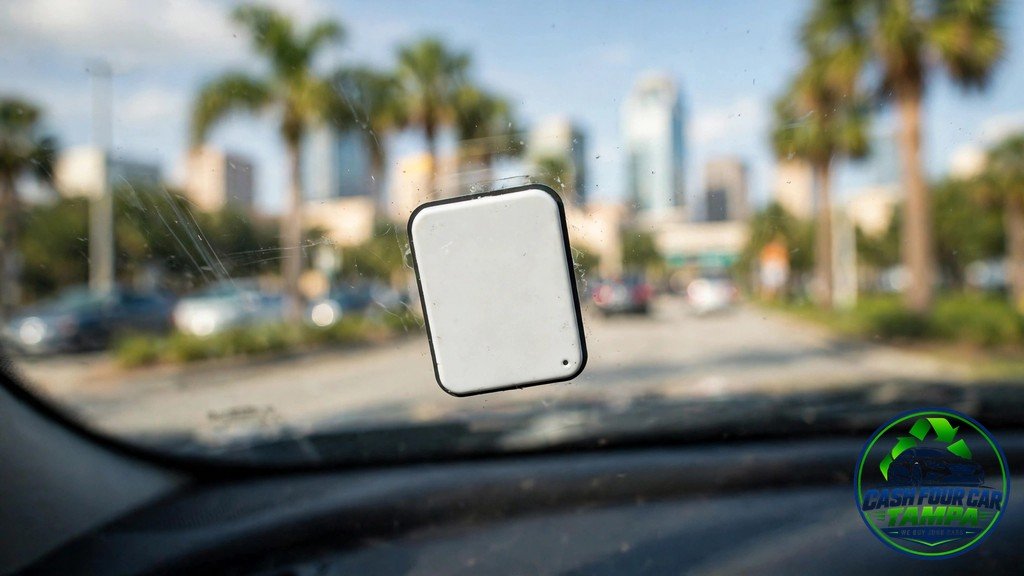
Take the transponder off the windshield before the car leaves after selling your car, then sign in to your SunPass account and remove the vehicle and its plate, so later tolls do not bill your account. A SunPass Mini sticker cannot move to another car, while a portable SunPass PRO can move to your next car. Check Toll-by-Plate and any parking app the same way after selling your car. SunPass explains the vehicle-removal steps on its own site.

Personal Items, Garage Remotes, and Digital Accounts to Clear Before Handover
Clear the car before the buyer takes it, not after, because access ends at handover. Check the glove box, the trunk, under the seats, and the spare-tire well, and take the garage remote and any spare key fob with you. Sign out of the car’s built-in apps, delete your phone pairing, and remove saved home or work addresses from the navigation system. Those are the last two checks before you hand over the keys after selling your car.
Confirm the Loan Payoff and Lien Release, Especially With ELT Titles
If a loan is still on the car, the payoff and the lien release are part of the after-sale file after selling your car. The lien has to be released before the title can transfer cleanly, and with an electronic title the release happens in the state’s system rather than on paper. Get it confirmed in writing after selling your car.

Private Sale With a Lien vs Dealer Payoff
In a private sale with a lien, the buyer usually pays the lender directly, or the seller pays the loan off from the sale money after selling your car, and the lender releases the lien once the payoff clears. A dealer or licensed buyer handles the payoff as part of the purchase. Either way, do not hand over the title until the payoff is arranged, because a liened title cannot transfer. Ask who sends the payoff and when, and get it in writing.
What Written Confirmation to Get From the Lender
Ask the lender for a payoff letter stating the exact payoff amount and the date it is good through, plus a lien release or written confirmation that the lien is satisfied. Keep both with the bill of sale after selling your car, because the title record does not always update the same day. If the lender sends the release to the state electronically, ask for the confirmation number or a copy of the release notice.
Checking the Title Record After Release
After the lender releases the lien, check the title record to confirm the car shows no lien before the buyer files for a new title after selling your car. The FLHSMV Vehicle Information Check tool shows the title status free. The documents you need are listed in our documents needed to sell a car guide.
If You Skip a Step, and the Red Flags to Watch After the Sale
Most after-sale problems come from a skipped step, not a bad sale, and they show up weeks after selling your car. A buyer who never titles the car keeps generating tolls and tickets in your name, and an insurance gap can suspend your license. Know the signs early, and keep the file that proves the sale date.
Tolls, Tickets, and Liability When the Buyer Never Titles the Car
If the buyer never files for a new title, the car stays registered in your name after selling your car, and every toll, red-light ticket, and parking fine after the sale can still arrive in your mailbox. Your defense is the file: the signed title copy, the bill of sale, the Notice of Sale confirmation, and the plate receipt. The notice alone does not transfer the title, but it is the strongest proof the car changed hands.
Insurance-Cancellation Suspension Risk
Cancelling insurance before the plate is surrendered is the fastest way to a suspension after selling your car. Florida tracks insurance against registration, and a registered plate with no coverage can trigger a suspension notice and reinstatement fees from $150. The fix is order, not speed: plate first, then insurance. If a suspension notice arrives anyway, take the plate receipt and the insurance confirmation to the tax collector and ask what the record shows before you pay anything.
Red Flags: Title Jumping, Open Titles, No Receipt, Keep My Plates or Insurance Requests
Walk away from a buyer who asks you to sign a blank title, leave the buyer name open, or resell the car without ever titling it in their own name — that is title jumping, and the tolls keep coming to you. Refuse any buyer who wants to keep your plates, keep your insurance active, or skip the receipt — those requests leave you carrying the risk after selling your car.
Tampa and Hillsborough County: Where to Go, Plus Special Cases to Link Out
Title work in Tampa runs through the Hillsborough County Tax Collector, and the special cases below are pointers only after selling your car. Each one has its own guide, and this post links out instead of repeating the detail. Bring the file after selling your car, and confirm the service before you go.

Hillsborough County Tax Collector as FLHSMV Agent: Branches and What to Bring
The Hillsborough County Tax Collector takes title transfers, plate surrenders, and registrations as the FLHSMV agent for the county. The downtown office is at 601 E Kennedy Blvd in Tampa, with branches on Falkenburg Road, Hillsborough Avenue, and Westshore Boulevard. Bring the signed title, a completed Form HSMV 82040 if the buyer is filing, photo ID, proof of Florida insurance, and payment — plus the plate if you are surrendering it after selling your car. Check the branch list on the FLHSMV site before you go after selling your car.
Special Cases in One Line Each: Inherited, Loan Remaining, No Title or Derelict, Salvage, Gated or Apartment Pickup, Flood-Damaged — Link Out, Do Not Detail
Six cases, one line each, after selling your car: Inherited — the surviving-spouse transfer under §319.28 or the estate’s paperwork decides who signs. Loan remaining — payoff first, lien release second, title transfer third. No title or derelict — ask which route applies, duplicate title on Form HSMV 82101 or derelict on Form HSMV 82137, and our guide to sell a junk car without a title explains both. Salvage — the brand stays on the record and a flood brand must be disclosed. Gated or apartment pickup — gate code plus management permission, confirmed before the truck arrives. Flood-damaged — disclose the flood history.
How This Post Connects to the Rest of the Sell My Car Cluster
This checklist is the last step of the sell-my-car cluster. The transfer guide explains the title signing in full, the documents guide lists every paper to bring, and the junk car pickup documents guide covers what happens at the truck. Read the checklist first, then follow the link for the step you are on after selling your car.
Sell Your Next Car in Tampa Without the After-Sale Headaches — Cash Four Car Tampa
Cash Four Car Tampa buys cars across Tampa and Hillsborough County, and the after-sale steps above are the papers behind every sale after selling your car. The business is open 7 days a week, 7:00 AM to 9:00 PM, at 902 N Tampa St, Tampa, FL 33602.
Free Towing, Same-Day Pickup, and Cash on the Spot: Homepage Claims
The homepage promises free towing, same-day pickup, and cash on the spot, and buys cars in any condition, including totaled and flooded cars. Title paperwork help and no-title cases are not promised on the homepage, so ask on the call whether the buyer can help with your title situation after selling your car.
What to Ask and Confirm at Pickup So Your After-Sale File Is Complete: Receipt, Signed Title Copy, Who Files What
At pickup after selling your car, ask three things: who files the title transfer, whether you get a receipt and a copy of the signed title, and what the driver needs — the title, the keys, and access to the car. Get the receipt before loading and photograph the signed title. To start, get a quote online or call (813) 321-4445 any day from 7:00 AM to 9:00 PM. With 4.9 out of 5 stars from more than 127 reviews and over 500 cars purchased, the record is public.
FAQs: What to Do After Selling Your Car in Tampa, Florida
The same three questions come up on almost every sale in Tampa after selling your car: plate first, notice within 30 days, insurance last. The answers below are the short versions of the steps above.
Do I Need to Remove My Plates After Selling in Tampa?
Yes. In Florida the plate belongs to you, not the car, so take it off before the car leaves after selling your car. Transfer it to your next car at the Hillsborough County Tax Collector, or surrender it there and keep the receipt. Never let the buyer drive away with your plate.
How Soon Must I File the Notice of Sale in Tampa?
Within 30 days of the sale, on Form HSMV 82050, at the Hillsborough County Tax Collector or through FLHSMV online services. File it the same day if you can — it costs nothing extra, and it is the form that tells the state you no longer own the car after selling your car.
When Can I Cancel Insurance After Selling My Car in Tampa?
Only after the plate is transferred or surrendered, because a registered plate with no insurance can trigger a suspension, with reinstatement fees from $150. If you have another car, move the policy to it instead of cancelling. Get the end date in writing after selling your car, and file that confirmation with the plate receipt.