Most Tampa car sales stall on paperwork, not price. The documents needed to sell a car in Tampa are few, but each one has to match: the name on the title, the photo ID, and the VIN on the car. This guide lists the documents needed to sell a car in Florida, explains what each one proves, and covers lost, liened, electronic, and other-name titles.
The Core Documents Checklist for a Tampa Sale
The documents needed to sell a car start with a short core list, and everything else here is a special case of these papers. The table shows each of the documents needed to sell a car and what it proves. If the car is a junk car headed for removal, the junk-car pickup documents guide covers the same papers.

| Document | What it proves | Who holds it |
|---|---|---|
| Title | Ownership and VIN | Seller |
| Photo ID | The seller is the person named on the title | Seller |
| VIN check | The car is the car on the title | Both |
| Odometer reading | Mileage at the sale | Seller discloses |
| Lien release | No lender claim remains | Lienholder or seller |
Title, Photo ID, and VIN: The Three That Must Match
The documents needed to sell a car begin with three items that must agree. The title names the owner, the photo ID proves you are that owner, and the VIN on the title must match the dashboard plate and the door sticker. Check all three side by side before the buyer arrives — the documents needed to sell a car are only as strong as their weakest match.
Odometer, Lien Release, and Registration: What Each Proves
The odometer reading proves the mileage at the sale, and a missing or false odometer disclosure is a second-degree misdemeanor. 2011 or newer cars are exempt after 20 years; 2010 or older cars after 10 years. The documents needed to sell a car also include the lien release, which proves no lender still has a claim, and the registration, which proves the car was legally on the road.
Keys, Service Records, and Manuals: Helpful, Not Ownership Proof
Keys, service records, and the owner’s manual make a sale smoother, but none of them proves you own the car. A buyer with the title, ID, and VIN match does not need your service history, and a seller with only keys cannot sell. Hand the extras over anyway: keys and receipts support your price, and the documents needed to sell a car stay the same with or without them.
Title Situations: What to Do for Each Kind of Title
Florida titles come in several forms, each changing the handover steps. A clean paper title is simplest, an electronic title needs a service-center visit, and a liened title needs the lender’s release. The documents needed to sell a car stay the same in every case; only the route to a signed transfer changes.
Clean, Electronic, and Liened Titles
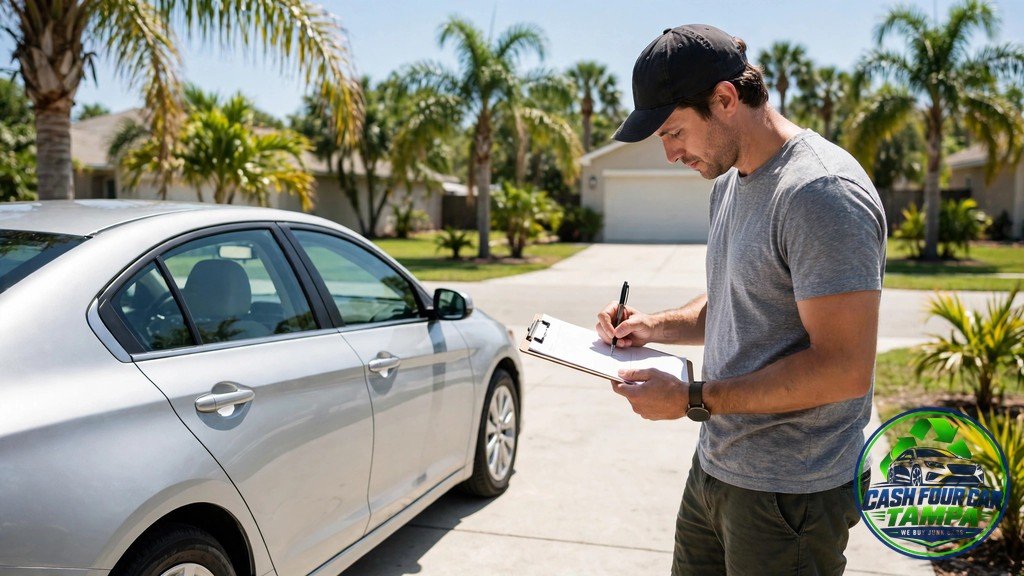
A clean paper title transfers in the “Transfer of Title by Seller” section: buyer name, price, date, odometer reading, then the seller signs. An electronic title has no paper to sign, so both parties visit a service center with photo ID for a secure reassignment on Form HSMV 82994 or 82092. A liened title cannot transfer until the lienholder releases its claim on the title itself or by filing Form HSMV 82260 — one more of the documents needed to sell a car.
Lost Titles, Another Person’s Name, and Joint Or vs And Titles
Fix a lost title before the sale: apply for a duplicate title on Form HSMV 82101, and a duplicate-title fee applies. You cannot sign a title in another person’s name, even for family, without legal authority to act for them. Joint titles turn on one word: “or” means either owner can sign alone, “and” means both must sign. Check the exact wording on the front of the title before promising a same-day sale — the documents needed to sell a car start with the names on the title.
Inherited, Salvage, Rebuilt, and Flood-Branded Titles, Plus No-Title Routes in Brief
An inherited car usually needs the surviving-spouse transfer under §319.28 or the estate’s paperwork — the documents needed to sell a car start there. A salvage or rebuilt title transfers like a clean title, but the brand stays on the record, and a flood brand must be disclosed. With no title at all, ask about two routes: duplicate title (Form HSMV 82101) and, for a qualifying derelict, Form HSMV 82137. The sell a junk car without a title guide explains both in full, and the documents needed to sell a car are the same once a title exists.
Plates and the Notice of Sale: The Two Steps Sellers Forget
Two steps are forgotten more than any others, and both protect the seller after the car leaves. The documents needed to sell a car are only half the job: the plate and the Notice of Sale decide who answers for the car once it leaves. Handle both on the day of the sale.
Remove, Transfer, or Surrender Your Plate — and Surrender Before Cancelling Insurance
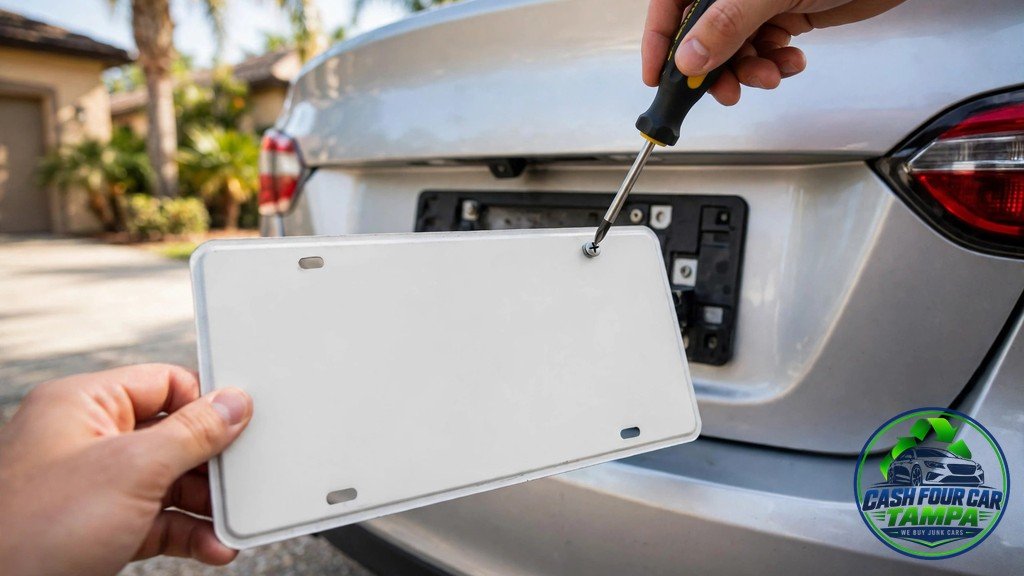
Take the plate off before the car leaves. In Florida the plate belongs to you, not the car: transfer it to your next vehicle or surrender it. Surrender the plate before cancelling insurance: a registered plate with no insurance can trigger a suspension, with reinstatement fees from $150. That order — plate first, insurance second — is the FLHSMV-stated order, and the documents needed to sell a car never include a plate left on the car.
File Form HSMV 82050 Within 30 Days: What Goes On It
File Form HSMV 82050, the Notice of Sale, within 30 days — one of the documents needed to sell a car that sellers forget most. The form carries the VIN, the buyer’s full name and identification, the sale date, and the price. Florida law requires it under §319.22, and filing it the same day costs nothing extra. Until the notice is filed, tolls, tickets, and liability can still come back to you.

Selling to a Licensed Dealer: The Statutory Exception, and How to Confirm It Safely
Under §319.22(2)(b), the notice requirement does not apply to a transfer to or by a licensed motor vehicle dealer, or to an insurer that took the car under a policy. That does not mean the notice vanishes on its own: ask the dealer to confirm, before the car leaves, that they will file the transfer and title work. Get the confirmation in writing on the receipt, and keep your copy of the signed title transfer — the documents needed to sell a car include the proof.
What a Legitimate Buyer Should Hand You Before the Car Leaves
A legitimate buyer hands you papers before the car leaves, not promises. The documents needed to sell a car work both ways: the buyer takes your title and ID check, and you take a quote, a receipt, and a copy of the signed transfer.
A Written Net Quote and a Receipt or Bill of Sale: Buyer, VIN, Date, Amount
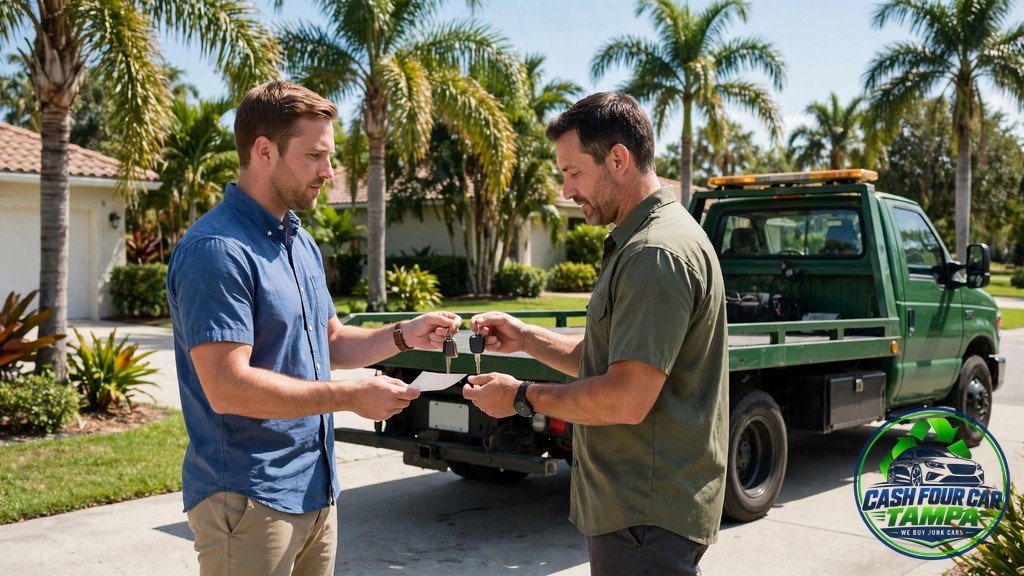
A written net quote states the exact amount you receive. The receipt or bill of sale states the buyer, the VIN, the date, and the amount, and both parties sign it. Florida does not legally require a bill of sale, but a signed receipt is the only paper proving the deal happened on those terms. The documents needed to sell a car include this receipt, so keep your copy before loading, and check the VIN on the receipt matches the title.
A Copy of the Signed Title Transfer
Photograph the signed title transfer before the buyer drives away. The copy shows the buyer’s name, the sale date, the odometer reading, and your signature. If the buyer later fails to retitle the car, the copy plus your filed Notice of Sale separates you from what happens next. Never let the only signed copy leave with the car, because the documents needed to sell a car include your proof of the transfer.
Payment Confirmed Before Loading — and What to Do If Any Item Is Missing
Confirm the payment before the car is loaded, not after it is gone — the documents needed to sell a car exclude a promise to pay. Cash in hand, a cleared check, or a confirmed bank transfer all count — a promise to pay after towing does not. If any item is missing, stop the sale and say so plainly. A legitimate buyer will fix the gap on the spot, and the documents needed to sell a car include the ones the buyer owes you.
Red Flags: Paperwork Warning Signs to Walk Away From
Paperwork problems are the clearest warning a buyer is not legitimate. The documents needed to sell a car are simple, so a buyer who cannot produce them is not cutting corners — they are working a different deal.

Blank or Open Titles and Title Jumping
Never sign a blank or open title — the documents needed to sell a car start with a title naming its buyer. A title signed with no buyer name lets the car change hands again without a transfer, and the next owner can run tolls and tickets in your name. Title jumping — buying and reselling without ever titling the car in your own name — works the same way, and leaves the original seller exposed. Fill in the buyer’s full legal name before you sign, so the documents needed to sell a car name the buyer.
No ID Check, No Receipt, or Pay-After-Towing
A buyer who skips the ID check, offers no receipt, or promises to pay after the tow is telling you how the deal goes. A legitimate buyer checks your ID against the title, writes a receipt, and confirms payment before loading. The documents needed to sell a car protect both sides, and a buyer who wants none of them wants no record of the sale.
Broker Pass-Throughs, Buyers Who Hide Their Identity, and Special Cases in Brief
Watch for broker pass-throughs and buyers who hide their identity — the documents needed to sell a car should name a real buyer. A broker who buys your car only to flip it the same day is a pass-through, and the title may never show your buyer. A buyer who will not give a full name, a business name, or a phone number is the same warning in another shape. Special cases follow the same rule: a power of attorney, a business sale, or a trust-owned car each need the right signer, so ask which document proves that person can sign.
Tampa and Hillsborough County: Where to File and What Tampa Buyers Ask For
Tampa sellers file at the Hillsborough County Tax Collector, the FLHSMV agent for motor vehicle services. The documents needed to sell a car are state forms, but the office that takes them is local, with branches across the county.

Hillsborough County Tax Collector as FLHSMV Agent: Where Forms 82050, 82101, and 82137 Go
The Hillsborough County Tax Collector takes Forms 82050, 82101, and 82137, plus title transfers, plate surrenders, registrations. The downtown office is at 601 E Kennedy Blvd in Tampa, with branches on Falkenburg Road, Hillsborough Avenue, and Westshore Boulevard. The documents needed to sell a car are the same at every branch, so use the office closest to you.
What Tampa Dealers and Cash Buyers Actually Ask For — and What They Leave Out
Tampa dealers and cash buyers ask for the same core papers — title, photo ID, VIN, odometer reading — plus a lien release when one applies. What they leave out is the part no website publishes: no Tampa buyer posts a full pickup checklist, so extras are confirmed on the call. The documents needed to sell a car do not change from buyer to buyer, but the extras they ask for do.
A Hillsborough Filing Checklist: Keep Copies, Plate, Insurance Order
Keep copies of everything: the signed title transfer, the receipt, the Notice of Sale, the lien release. Keep the plate until you transfer or surrender it, and the insurance in force until then. The documents needed to sell a car are only finished when the copies are in your folder and the plate is off.
How This Fits the Sell My Car Cluster
This guide is one piece of the sell-my-car cluster, and the documents needed to sell a car run through every route in it. The papers do not change, only who handles them and how fast the sale closes. The three routes below show where it differs.

Private Sale vs Car Buyer vs Trade-In: Document Differences in One Paragraph Each
You gather the title, ID, VIN, and odometer reading, write the bill of sale, file the Notice of Sale within 30 days, and meet the buyer at the tax collector for an electronic title. The private sale vs car buyer guide compares the two routes in full, and the documents needed to sell a car are the heaviest lift on the private side.
You bring the title, photo ID, and VIN, and sign the transfer and the odometer disclosure, but the buyer handles the receipt, the title copy, and the filing, and pays first. Confirm on the call that the buyer files the transfer — the documents needed to sell a car are only finished when the transfer is filed.
You sign the title over to the dealer, who handles the transfer and the tax credit on the new car, and the old car’s Notice of Sale is covered by the licensed-dealer exception. The trade-in still needs the same documents needed to sell a car — title, ID, VIN, odometer — and a lien payoff if the car is not paid off.
Next Steps After the Sale: Title Transfer and After-Selling Checklist
The buyer has 30 days to transfer the title and register the car; your Notice of Sale should already be filed. Check the plate is transferred or surrendered, the insurance is cancelled only after the plate, and the copies are filed. The documents needed to sell a car are done when every copy is filed and nothing with your name is attached to the car.
Related Guides: Sell Fast, Without Listing, With a Loan, Inherited, Without Dealership Hassles, and the Junk Car Buyer and Removal Clusters
The rest of the cluster builds on this guide, and the documents needed to sell a car run through every guide in it. The sell your car fast in Tampa guide covers the fastest route from quote to pickup, and the without-listing, with-a-loan, inherited-car, and without-dealership-hassles guides each take one. The junk-car-buyer cluster covers choosing a buyer and valuing the car; the removal cluster covers pickup, access, and after removal. The documents needed to sell a car are the same papers in every one of those guides.
Sell Your Car in Tampa With Cash Four Car Tampa
Cash Four Car Tampa buys cars across Tampa and Hillsborough County, and the documents needed to sell a car are the papers listed here. The business is open 7 days a week, 7:00 AM to 9:00 PM, at 902 N Tampa St, Tampa, FL 33602.
What to Have Ready for Your Quote
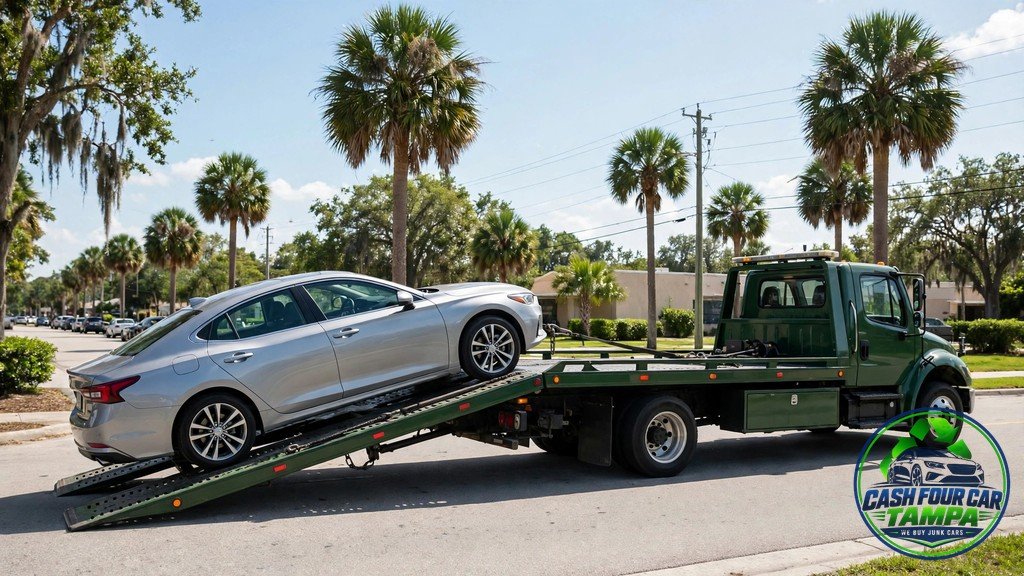
Have the title, your photo ID, and the VIN ready for your quote, plus the odometer reading and the lien release if one applies. The quote takes less than 60 seconds. Call (813) 321-4445 or use the get-a-quote page, and have the car where the truck can reach it. The documents needed to sell a car are the whole checklist — nothing else is required to start.
What You Receive at Pickup: Quote, Receipt, Title Copy, Payment Timing — Only as the Business Confirms It
What you receive at pickup — quote, receipt, title copy, payment timing — is only as the business confirms it, so confirm each item on the call. The homepage promises free towing and same-day pickup, and buys cars in any condition, including totaled, flooded, and salvage-title cars. Ask on the call which of the documents needed to sell a car the driver will check. With 4.9 out of 5 stars from more than 127 reviews and over 500 cars purchased, the record is public.
FAQs: Documents Needed to Sell a Car in Tampa
The documents needed to sell a car raise the same three questions in almost every sale. The answers below cover the core list, the no-title case, and the plate.
What Documents Do I Need to Sell My Car in Tampa?
You need the title, a photo ID, and the VIN, plus the odometer reading and a lien release if one applies. The title names the owner, the ID proves you are that owner, and the VIN on the title must match the car. Keys, service records, and the manual help the sale but do not prove ownership. The documents needed to sell a car are the same for a private sale, a car buyer, or a trade-in — only the handler changes.
Can I Sell My Car in Tampa Without a Title?
Sometimes, but not by signing a title you do not have. Ask which route applies: duplicate title (Form HSMV 82101) or, for a qualifying derelict, Form HSMV 82137. A licensed salvage dealer or registered recycler is the only buyer for a derelict route. Until a title exists, the documents needed to sell a car cannot be completed, so start the duplicate-title application first.
Do I Need to Remove My Plates Before Selling in Tampa?
Yes. Take the plate off before the car leaves, then transfer it to your next vehicle or surrender it. Surrender the plate before cancelling insurance: a registered plate with no insurance can trigger a suspension. The documents needed to sell a car do not include the plate, but the plate stays your responsibility until transferred or surrendered.