Yes — a wrecked car still brings cash in Tampa, because buyers pay for scrap metal, reusable parts, and sometimes a repairable salvage vehicle. This guide explains what counts as wrecked, how the title brand changes the sale, how the offer is built, and which red flags end it.
Yes — You Can Get Cash for a Wrecked Car in Tampa, With Conditions
A wrecked car is worth its metal, its parts, and sometimes its repair value. The buyer weighs the car, prices the parts that still sell, and checks the title brand. The three conditions are the title, the completeness of the car, and any lien on it.
Scrap Metal, Reusable Parts, or Repairable Salvage Vehicle — Not a Road Car
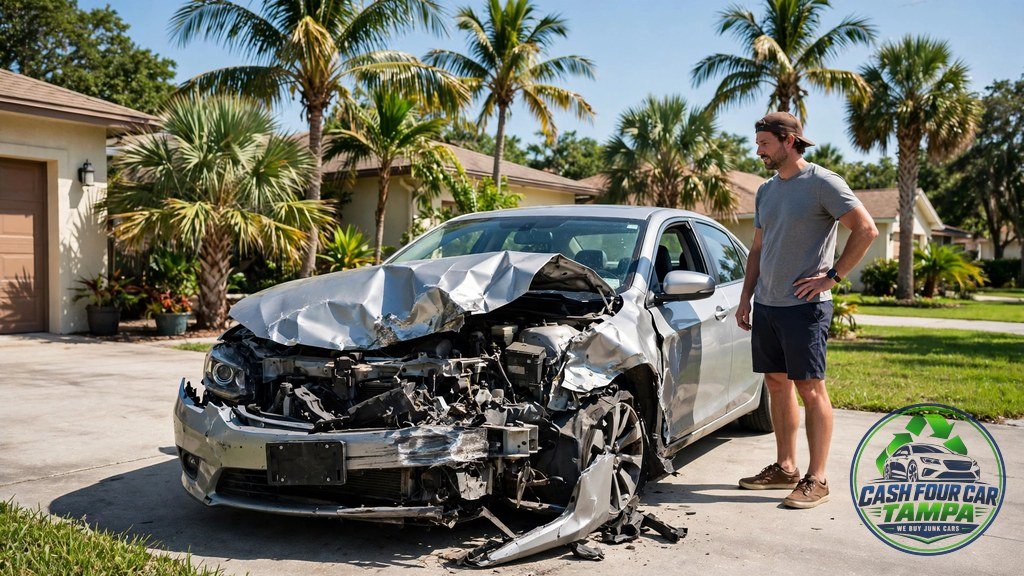
A wrecked car is priced as three things at once, never as a road car. The scrap floor comes from weight: tons times the price of scrap steel, which moves daily. On top of that floor sits the parts premium — the engine, transmission, converter, wheels, and other parts a yard can still sell. A wrecked car with a straight frame and a running engine can also sell as a repairable salvage vehicle, which is worth more than scrap and parts alone.
When You Cannot Sell the Usual Way: Lien, Certificate of Destruction, and Completeness Floors
Three things can block the usual sale of a wrecked car. First, a lien: if a lender still holds a lien on the title, the lien must be paid or released before the title can transfer, and the buyer cannot take the car without it. Second, a certificate of destruction: the car can only be sold for parts or scrap, never titled again. Third, completeness: a wrecked car missing its engine, transmission, or wheels loses most of its parts premium, and some buyers will only take it at the scrap floor.
What Counts as Wrecked in Tampa?
A wrecked car is any car damaged in a collision, a flood, or a fire badly enough that repair is a real question.
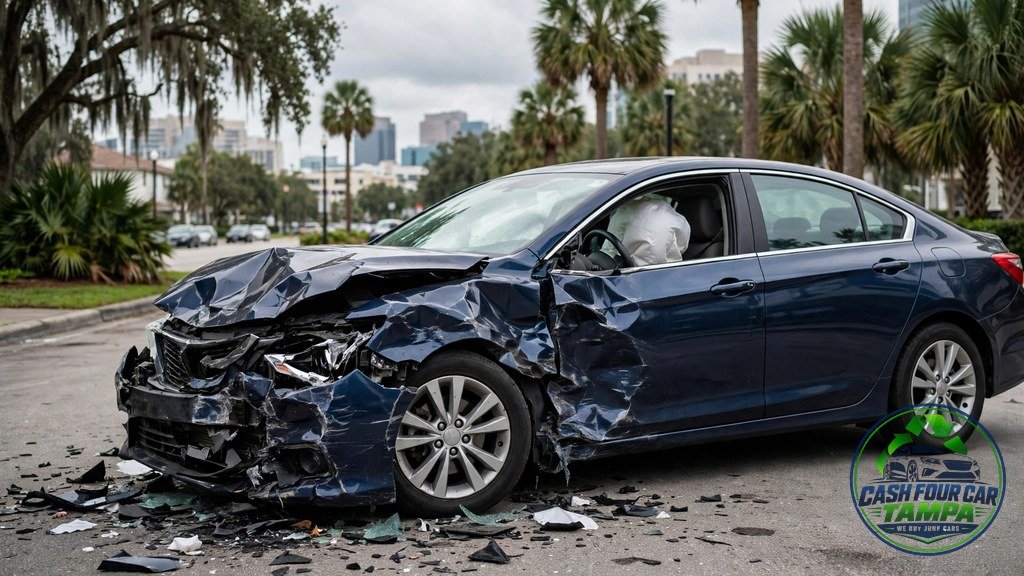
Collision, Frame, Unibody, Crumple-Zone, and Suspension Damage
Collision damage runs from a bent fender to a bent frame. Most modern cars have a unibody, where body and frame are one structure, so a hard hit can bend what holds the engine, suspension, and wheels in line. Suspension damage — bent control arms, a broken strut, a shifted subframe — can leave the car unable to steer or roll straight. Tell the buyer exactly what bent and what still moves.
Airbag Deployment Signals Severe Impact, But Total Loss Is an Economic Test
Deployed airbags signal a severe impact, but they do not by themselves total a wrecked car. Total loss is an economic test: the insurer compares the full repair cost with the car’s actual cash value, and Florida law sets the line at 80 percent of the replacement cost for an uninsured vehicle. A single airbag often costs $1,000 or more to replace, and a car with several deployed airbags can carry several thousand dollars of restraint-system work alone. The airbags raise the bill; the numbers decide the verdict.
Flood-Totalled Cars: Link Out to the Flood Topic
Flood damage is its own category, and a wrecked car that sat in water needs the flood guide, not the collision guide. Our coming guide to getting cash for a flood-damaged car in Tampa covers the flood checks in full. For the offer, the published pattern is simple: flood or fire damage cuts about $200 to $500 from the value, and a flood car often prices near scrap. Our guide to how much cash you can get for a junk car shows where that deduction sits in the full value picture.
Salvage vs Clean Title in Florida for Wrecked Cars
The title brand is the first thing a buyer reads on a wrecked car, because it decides whether the car can ever drive again. Florida law draws three lines: clean, salvage rebuildable, and certificate of destruction.
Clean-But-Wrecked Cars and Disclosure
A wrecked car can still carry a clean title if the damage never reached the total-loss line. That happens with a hard hit on a newer car or damage the insurer repaired without declaring a total loss. The title stays clean, but the duty to disclose does not go away: Florida law requires the seller of a rebuilt or flood-branded vehicle to disclose the prior condition in writing before the sale. Tell the buyer about the crash, show the repair records if you have them, and price the car as a wrecked car with a clean title, not as a car that was never hit.
Salvage Rebuildable, Inspection, and Permanent Rebuilt Brand
A salvage rebuildable title means the insurer declared the wrecked car a total loss, but the state still allows it to be repaired and returned to the road. The owner repairs the car, then brings it for a rebuilt inspection with the salvage title, a Statement of Builder on Form HSMV 84490, and receipts for every major part used. If the car passes, the state issues a new title with a permanent rebuilt brand and affixes a rebuilt decal to the car.
The video below explains what salvage and rebuilt brands mean from the buyer’s side: it is about buying a rebuilt or salvage title car, not selling a wrecked one, but it shows why the brand cuts the value.
Certificate of Destruction: Parts and Scrap Only
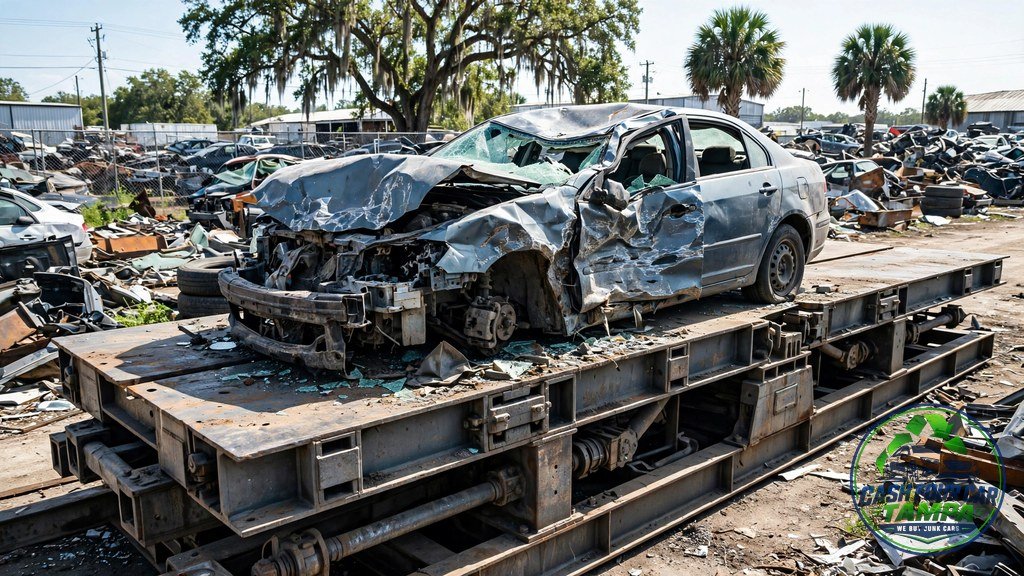
A certificate of destruction is the end of the road for a wrecked car as a vehicle. Under Florida Statute Section 319.30, a late-model car — seven years or newer — worth $7,500 or more is declared unrebuildable when repairs reach 90 percent or more of its retail value. A car worth less than $7,500, or an older car, gets the same certificate when its only residual value is parts or scrap. The certificate can be reassigned at most two times, and no title can ever issue for that car. A wrecked car with a certificate of destruction sells only to a licensed salvage dealer or recycler, for parts or scrap.
How Being Wrecked Changes Your Cash Offer in Tampa
A wrecked car brings less than the same car undamaged, and the gap comes from three places: parts that no longer sell, the title brand, and towing. Our guide to how cash for junk cars works explains the full build; this section shows how the wreck changes it.
| Title brand | What it means | Selling route |
|---|---|---|
| Clean title, wrecked but not totaled | Damage never reached the total-loss line | Sell as a used car or to a cash buyer |
| Salvage rebuildable | Total loss, but repairable and inspectable back to the road | Sell to a rebuilder, or repair and inspect it first |
| Certificate of destruction | Declared unrebuildable; parts and scrap only, no title can issue | Sell to a licensed salvage dealer or recycler |
| No title at all | Ownership is not proven by a title document | Ask which route applies: duplicate title or derelict |
Scrap Floor: Weight and Metal Value
The scrap floor is the car’s weight in tons times the price of scrap steel. At $195 a ton in October 2026, a 3,300-pound sedan’s metal is worth about $320 and a 5,000-pound pickup’s about $490 — an illustration, not a fixed price, because scrap moves daily. A wrecked car that has lost its engine, transmission, or wheels still holds its floor, because the steel is still there. Weight is the one part of the offer that damage cannot take away.
Parts Premium: Engine, Transmission, Wheels, and Catalytic Converter
The parts premium is where a wrecked car earns above its scrap floor. A working engine is worth about $200 to $600, a working transmission about $150 to $400, and an intact catalytic converter about $50 to $400 or more, by one buyer’s published ranges. Deployed airbags and major collision damage cut about $100 to $400 from the value. A wrecked car with its engine, transmission, and converter intact keeps most of its premium; a stripped shell keeps almost none.
Severity, Missing Parts, Title Brand, and Headline vs Net
Four things move the number after the floor and the premium. Severity decides what else sells: a bent frame takes value away, while a straight frame and clean doors add it. Missing parts subtract directly, and a missing converter is the single largest deduction on any offer. The title brand sets the ceiling: a clean title leaves every route open, a salvage brand narrows the buyer pool, and a certificate of destruction leaves only parts and scrap. And the headline is not the number: ask for the net cash in hand after towing, in writing.
How a Wrecked Car Is Towed and Loaded in Tampa
A wrecked car is loaded, not driven, onto the truck. Whether it rolls, steers, and brakes decides the equipment. Our guide to how to get cash for a non-running car covers the loading equipment in full; this section covers the wreck.
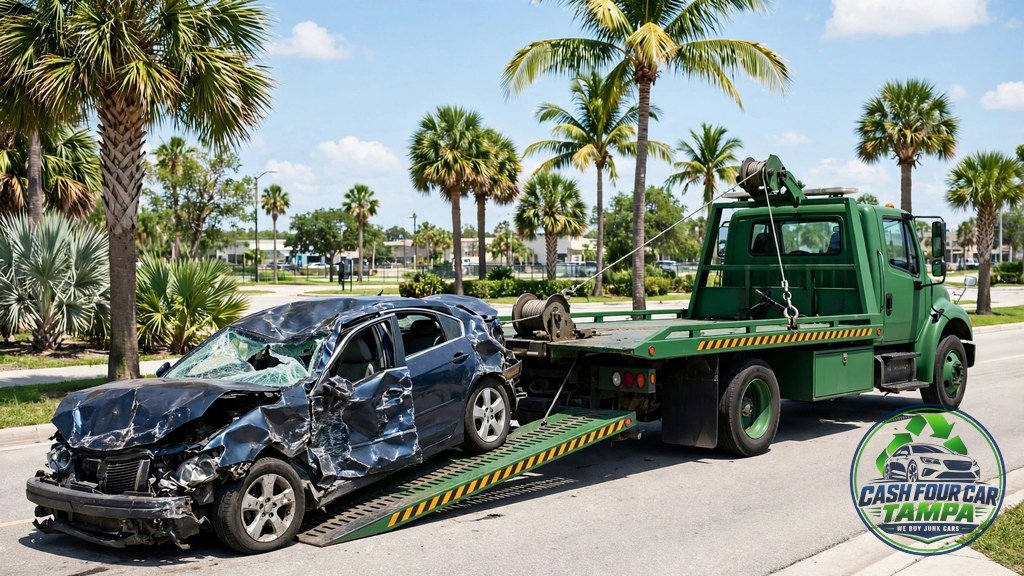
Rolling, Steering, and Braking Cars: Winch on Rollback
A wrecked car that still rolls, steers, and brakes loads the easy way: the driver lowers the rollback bed, hooks the winch cable to a tow point, and pulls the car up slowly while a second person steers. Tell the buyer the car still rolls before the quote, because a roller costs less to collect than a car that needs dollies.
Non-Rollers: Flatbed, Dollies, Skates, and Forklift
When the wheels will not turn, the driver brings different tools. A wheel dolly is a small cart that slides under a locked wheel, and a go-jack skate does the same job with a lower profile. The driver sets one under each locked wheel, then winches the car onto the flatbed. A wrecked car with a bent frame or a crushed corner may need a forklift to lift it onto the bed, and that is a job for a yard truck, not a roadside rollback. Ask the buyer what equipment the truck carries before booking, because a truck without dollies cannot move a wrecked car with locked wheels.
Accident-Scene, Tow-Yard, and Body-Shop Pickup Confirmations
A wrecked car is not always at home when it sells, so the pickup needs three confirmations. At an accident scene, the seller must have the right to release the car, and the police or the tow yard must agree the car can go. At a tow yard, settle the storage bill in writing before the truck arrives. At a body shop, the shop must confirm the car is ready to go and that no repair bill holds it. Confirm the location, the release, and the bill before the truck rolls, and a wrecked car leaves any of the three without a second trip.
What to Have Ready and Step by Step: Quote to Cash in Tampa
From quote to cash, a wrecked car follows the same steps as any junk car sale. Have the papers and the pictures ready before the call.
Title, Photo ID, VIN, Odometer, Keys, Lien, and Insurance
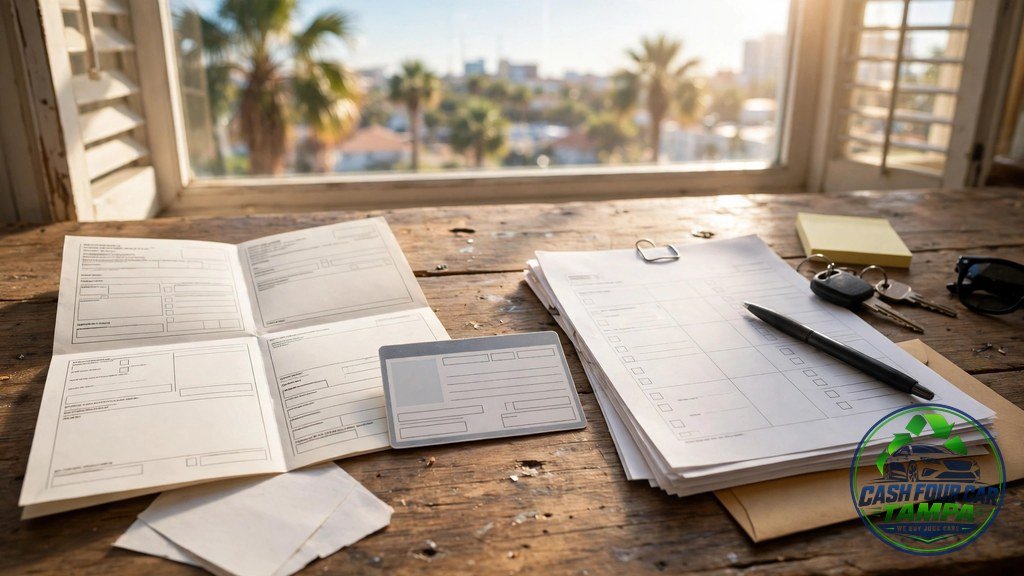
Have seven things ready before pickup day for a wrecked car. The title, signed in your name, with the buyer, price, and odometer reading filled in. Photo ID that matches the name on the title. The VIN, so the buyer can check it against the title and the brand. The keys, if you still have them. The lien: if a lender holds one, bring the payoff figure and the lender’s name. And the insurance: tell the buyer whether a claim is open. Check the FLHSMV site for the current form version before you sign anything.
Missing-Parts List, Location, Access, and Honest Damage Photos
Write down what is missing before the buyer quotes, because a wrecked car is priced on what is still there. List the engine, transmission, converter, wheels, airbags, and glass, and mark each one present or gone. Note the location and how the truck reaches the car. Take honest damage photos from all four corners and send them with the quote request.
Written Net Quote, Schedule, Verify, Pay Before Loading, and Paperwork Pointers
Get the quote in writing before you book, with towing included and the net cash named. Schedule the pickup for a time you can be there, and confirm the window on the day. When the driver arrives, check the name on the truck against the buyer you booked, and ask to be paid before loading. File the Notice of Sale on Form HSMV 82050 within 30 days, as Florida Statute Section 319.22 requires, so later tickets and tolls do not come back to you. If the title is lost, the duplicate-title route on Form HSMV 82101 applies, and if the car is 10 model years or older and under $1,000, the derelict route may apply instead. Ask which route applies first.
Red Flags When Selling a Wrecked Car for Cash in Tampa
A wrecked car attracts the same red flags as any junk car sale, and the damage gives a bad buyer more room to cut the price. Four refusals end the sale.
Headline vs Net and Pickup-Day Bait-and-Switch
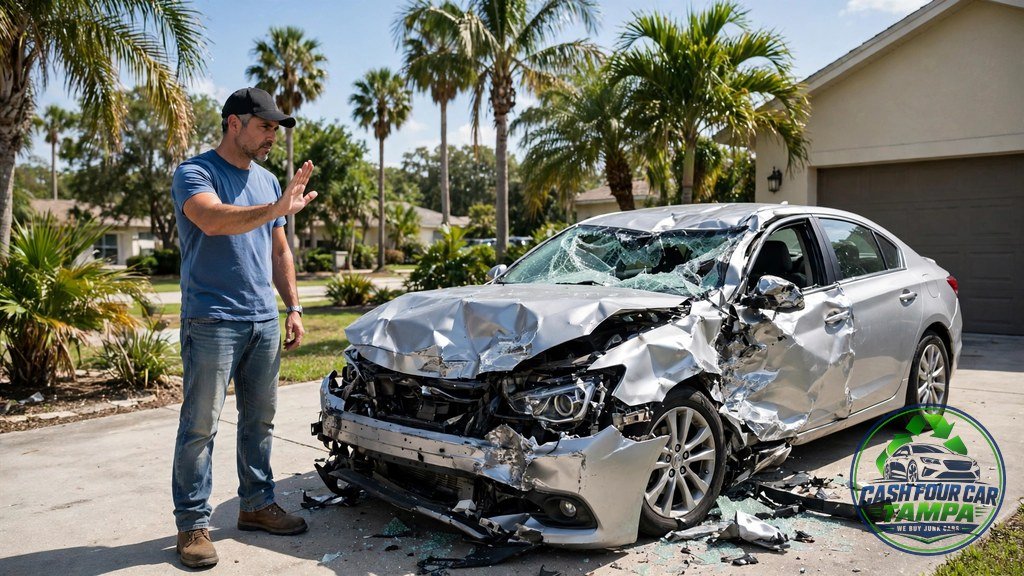
A headline that is not a net figure is the first red flag on a wrecked car. Ask for the cash in hand after towing, in writing, before you book. A pickup-day price cut is the second: show the written quote and ask what changed, because damage you already described and photographed cannot be a surprise. Walk away from a buyer who changes the number at the curb.
No Written Quote, Blank Title, and Missing Buyer Details
Three more refusals end the sale for a wrecked car. No written quote at all: a buyer that will not write the number down can change it at the curb. A blank title: anyone can fill in any buyer name later, so never sign one, and never sign a title with the price or the buyer left blank. Missing buyer details: ask who the buyer is, the name that will go on the title, and the name of the tow company.
Overpayment, Pay-Later, Broker Pass-Through, and Unequipped Buyer
Four more patterns mark a bad deal on a wrecked car. Overpayment: a buyer who sends a check for more than the price and asks for the difference back is running a scam. Pay-later: a buyer who loads the car and promises to pay tomorrow has the car and you have nothing. Broker pass-through: a broker takes your details, finds a buyer, and takes a cut. Unequipped buyer: a truck without a flatbed, a winch, or dollies cannot move a car with locked wheels. If any of the four shows up, stop the sale and call a direct buyer.
Get Cash for Your Wrecked Car From Cash Four Car Tampa
Cash Four Car Tampa buys wrecked cars across Tampa and Hillsborough County, with free towing and same-day pickup. Tell us about the damage, the title brand, and the location first.
What to Tell the Business First: Damage, Title Brand, and Location
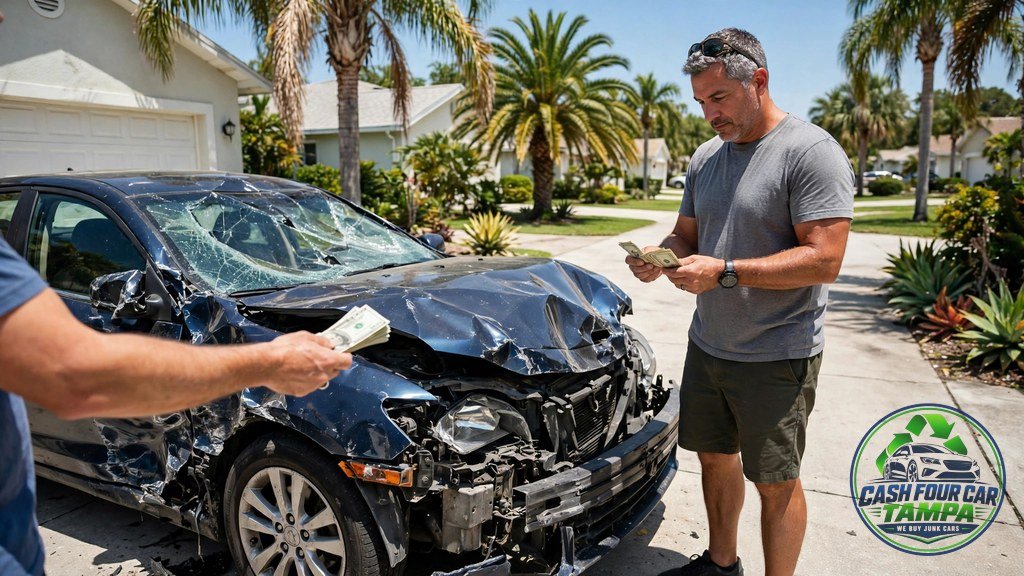
Have five things ready when you call: what hit the car and what bent, whether the car rolls, steers, and brakes, the title brand — clean, salvage rebuildable, certificate of destruction, or missing — where the car sits, and truck access. Say whether the airbags deployed and name every missing part, because those facts decide the quote a wrecked car comes back with. The quote takes less than 60 seconds, and the pickup is free with same-day service in most cases.
What Happens Next: Offer, Pickup, and Payment Terms in Writing
Payment terms and pickup handling are not promised on the homepage, so ask on the call for the offer on your wrecked car, the pickup time, and the payment terms in writing before you agree to anything. To start, get a quote online or call (813) 321-4445 any day from 7:00 AM to 9:00 PM. With 4.9 out of 5 stars from more than 127 reviews and over 500 cars purchased, the record is public.
FAQs About Getting Cash for a Wrecked Car in Tampa, Florida
The same three questions about a wrecked car come up on almost every sale in Tampa.
Can I Sell a Wrecked Car With a Salvage Title in Tampa?
Yes. A car with a salvage rebuildable title sells to a buyer who rebuilds it or to a buyer who wants the parts, and the sale follows the same steps as any car sale. A car with a certificate of destruction is different: it can only be sold for parts or scrap, never titled again. Check which paper you hold before you call, because the brand decides the buyer.
Does Airbag Deployment Mean My Car Is Totaled in Tampa?
No. Airbag deployment signals a severe impact, but total loss is an economic test: the repair cost is weighed against the car’s value, and Florida law sets the line at 80 percent for an uninsured vehicle. A newer wrecked car with deployed airbags is often repaired, while an older car with the same damage is more likely to be declared a total loss, because the airbag bill alone can run to several thousand dollars. The deployment raises the bill; the numbers decide the verdict.
Can I Sell a Wrecked Car Without a Title in Tampa?
A title makes the sale simple, but a missing title does not always end it. If the title is lost, the duplicate-title route on Form HSMV 82101 applies; if the car is 10 model years or older and under $1,000, the derelict route may apply instead. Our guide to how to sell a junk car without a title covers both routes in full. A car without a title still needs proof of ownership, so have photo ID and any records ready.