Yes — a non-running car still brings cash in Tampa, because buyers pay for scrap metal and reusable parts, not for a car that drives. This guide explains what counts as a non-running car, how the offer changes, how pickup works, and which red flags end the sale.
Yes — You Can Still Get Cash for a Non-Running Car in Tampa
A non-running car is worth its metal and parts. The buyer weighs the car, prices the parts that still sell, and takes off the cost of towing and draining it.
Scrap Metal Plus Reusable Parts, Not Runner Value
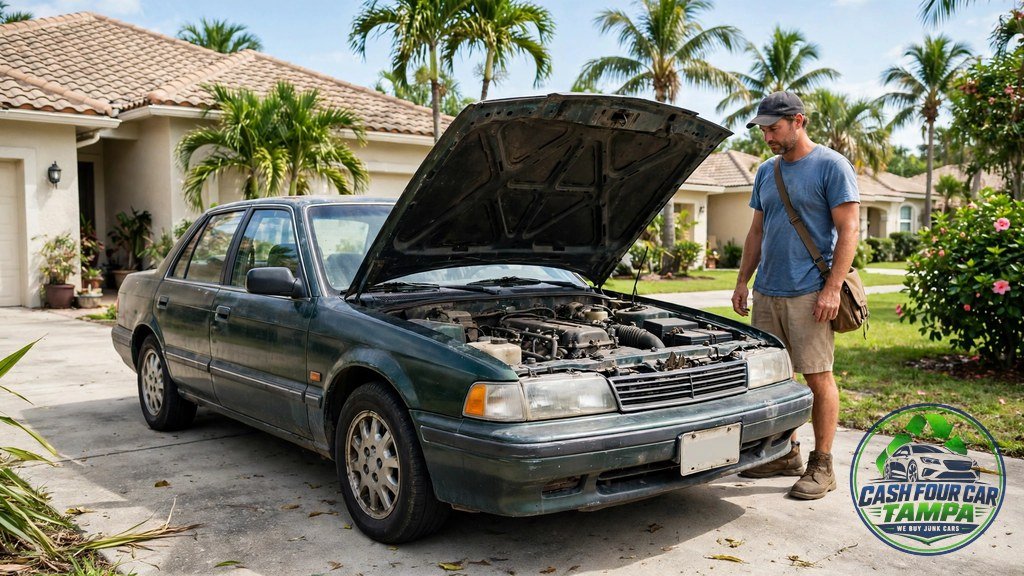
A non-running car is priced like a parts donor, not like a car you can drive away. The scrap floor comes from weight: tons times the price of scrap steel, which moves daily. On top of that floor sits the parts premium — the engine, transmission, converter, and other parts a yard can still sell. Ask the buyer which parts they counted, because that list is what separates one quote from another.
Ownership, Completeness, and Tow Access Conditions
Three conditions decide whether a non-running car can be sold at all. First, ownership: the title must be in the seller’s name, or the buyer must accept a documented no-title route. Second, completeness: the engine and transmission must still be in the car, and at least three tires must be attached. One national buyer, Wheelzy, publishes the rule plainly: engine and transmission complete, at least three tires attached, spares or donuts counting toward the three. Third, access: the tow truck must reach the car, and the driver must be able to winch it onto the bed. A non-running car parked behind a locked gate or sunk in soft ground can still be collected, but only if the buyer knows about the access problem before the quote.
What Counts as Non-Running in Tampa?
Not every non-running car fails in the same way, and the failure decides the price. Name the failure exactly when you call — the buyer prices the cause, not just the symptom.
Won’t Start vs Won’t Drive vs Won’t Roll
A car that will not start may still roll and steer, which matters at pickup. A dead battery or bad starter stops the engine but leaves the wheels free, so the driver can winch the car straight onto the flatbed. A car that will not drive has a deeper fault, a dead transmission or broken axle, but it may still roll in neutral. A car that will not roll at all has locked wheels, a seized brake, or a transmission stuck in park, and needs dollies or skates first. When you describe a non-running car, say which of the three it is, because each one changes the equipment the driver brings.
Engine, Transmission, Seized, Electrical, Wrecked, and Flood Causes
The cause of the failure sets the value of the non-running car. A dead battery or bad starter costs the buyer almost nothing, because the engine and transmission still sell. A seized engine or failed transmission removes the two most valuable parts, and the offer falls toward the scrap floor. Electrical faults sit in the middle: the car may run again with a repair, but the buyer prices it as it sits. Wreck damage and flood damage cut hardest, because water and bent metal ruin parts a yard would otherwise sell. Tell the buyer the cause in plain words, and the quote for a non-running car will match the car that arrives.
How Non-Running Changes Your Cash Offer in Tampa
A non-running car brings less than the same car running, and the gap comes from three places: parts that no longer sell, towing cost, and buyer risk. Our guide to how cash for junk cars works explains the full build; this section shows how the non-running part changes it.
| Cause | Effect on offer | Towing note |
|---|---|---|
| Dead battery, bad starter | Parts premium mostly intact; near the top of the non-running range | Flatbed or winch; rolls and steers |
| Seized engine or failed transmission | Engine and transmission value lost; near scrap floor plus converter | Flatbed plus winch; may need dollies |
| Wrecked or flood-damaged | Parts premium cut sharply; flood cars price near scrap | Flatbed only; check for locked wheels |
| Locked wheels, steering, or park | No value change by itself; access cost may reduce the net quote | Dollies or skates; never drag |
Scrap Floor Plus Parts Premium, Minus Missing Parts
The scrap floor is the car’s weight in tons times the price of scrap steel. Scrap steel averaged $177.27 a ton on September 29, 2026, per iScrap App, which puts a 3,000-pound sedan near $266 — a ceiling for the metal, not an offer. The parts premium for a non-running car sits on top: a working engine, good transmission, and intact converter each add value a yard can recover. Missing parts subtract from it, and a bare body is worth about $50 to $300 by one buyer’s published estimate. A non-running car with its engine and converter intact keeps most of its premium; a stripped shell keeps almost none.
Weight, Converter, Condition, Scrap Movement, and Access
Five things move the number. Weight sets the floor: heavier cars hold more steel, so a truck or SUV usually brings more than a compact sedan. The converter matters most after weight, because it holds precious metals a yard can sell. Condition decides what else sells: clean doors, glass, and interior parts add value, while flood or fire damage takes it away. Access is the last factor: a car the truck cannot reach costs more to collect, and that comes out of the quote.
How a Non-Running Car Is Towed and Loaded Safely in Tampa
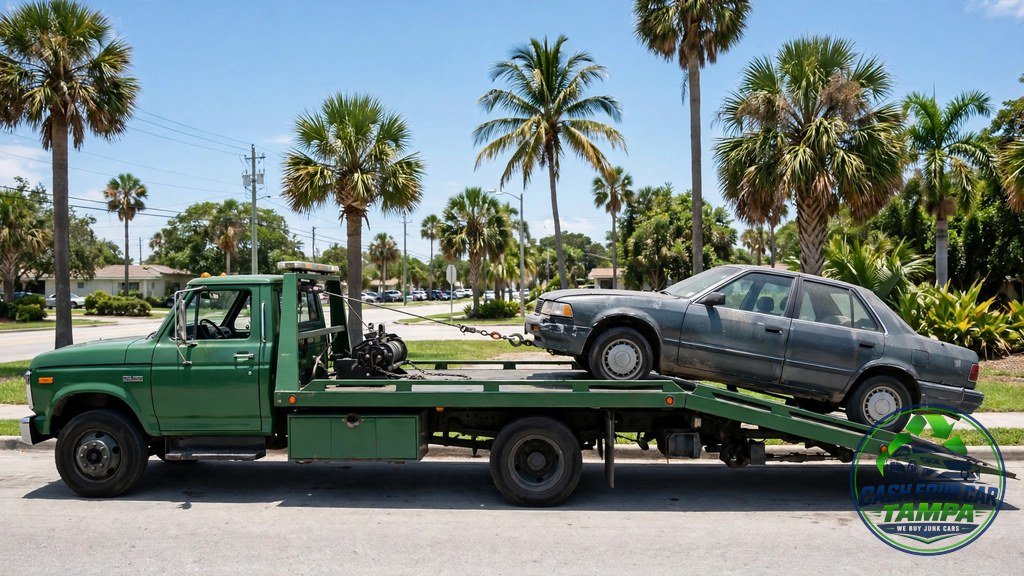
A non-running car is loaded, not driven, onto the truck. The default is a flatbed with a winch: the bed tilts down, the cable pulls the car up, and all four wheels leave the ground. Our guide to how a tow truck removes a car that does not run covers the equipment in full; this section covers your driveway.
Flatbed Plus Winch as Default
The flatbed is the default for a non-running car because it lifts every wheel off the road. The driver lowers the bed, hooks the winch cable to a tow point, and pulls the car up slowly while a second person steers. Nothing drags, nothing spins, and the transmission stays still because the wheels never turn on the road.
Dollies and Skates for Locked or Non-Rolling Wheels
When the wheels will not turn, dollies and skates do the rolling instead. A wheel dolly is a small cart that slides under a locked wheel; a go-jack skate does the same job with a lower profile. The driver sets one under each locked wheel, then winches the car onto the bed. This is the normal fix for a car stuck in park, a seized brake, or a flat tire. Ask the buyer whether they carry dollies before booking, because a truck without them cannot move a locked non-running car.
The video below shows one way to move a non-running car that will not start: loading it onto a utility trailer without a winch. It is a do-it-yourself method, not a professional pickup, but it shows the same loading problem.
Unsafe: Dragging and Wheel-Lift on AWD, EV, Locked-Steering, and Park-Locked Cars
Dragging a non-running car is the fastest way to damage it further, and some cars must never be towed with wheels on the ground. All-wheel-drive cars need all four wheels off the ground: towing with two wheels down can destroy the transfer case or differentials, and neutral does not disconnect the wheels. Electric cars are the same: spinning drive wheels generate current into an unpowered battery circuit, and every major maker requires flatbed transport. A locked steering wheel or a transmission stuck in park means the car cannot roll straight, so dragging tears tires and bends parts. If the driver suggests dragging a non-running car, stop the pickup and call a buyer with a flatbed.
From Quote to Cash at Pickup: What to Have Ready and Steps in Tampa
From quote to cash, a non-running car follows the same steps as any junk car sale.
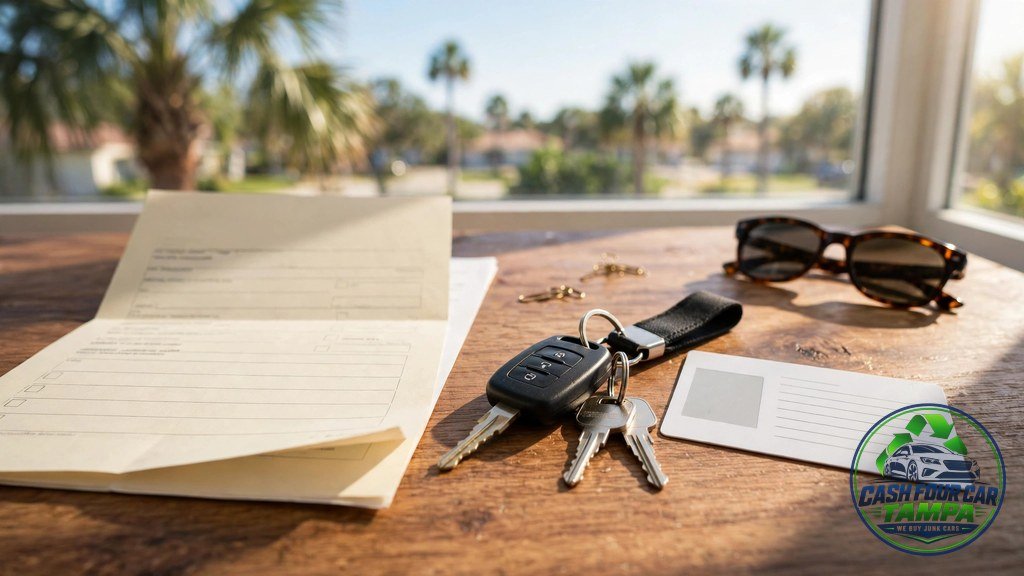
Title, Photo ID, VIN, Keys If Held, Honest Condition, Location, and Access
Have seven things ready before pickup day for a non-running car. The title, signed in your name, with the buyer, price, and odometer reading filled in. Photo ID that matches the name on the title. The VIN, so the buyer can check it against the title. The keys, if you still have them — a non-running car without keys still sells, but say so on the call. An honest condition list: what starts, what rolls, what is missing. The location, with the gate code if there is one. And access: how the truck reaches the car and whether the ground is firm. Our guide to how to compare cash offers explains the quote side; the papers are what close the sale.
Written Tow-Inclusive Quote, Schedule, Verify, Pay Before Loading, Then Load
Get the quote in writing before you book, with towing included and the net cash named. A headline quote with the tow deducted later is worth less than a lower net figure, so ask for the number in your hand. Schedule the pickup for a time you can be there, and confirm the window on the day. When the driver arrives, check the name on the truck against the buyer you booked, and ask to be paid before loading. Then the winch pulls the non-running car onto the bed, the driver straps it down, and the sale is done.
Empty the Car and Remove Plates
Empty the car before the truck arrives: once it is on the bed you cannot reach the trunk or glove box. Check under the seats, the door pockets, and the spare-tire well for anything you want to keep. Take your Florida plates off before the buyer drives away — the plates stay with the seller, not the car. Surrender the plate before you cancel the insurance, because a registered plate with no insurance behind it can trigger a suspension.
Paperwork in Brief and Red Flags for Non-Running Cars in Tampa
The paperwork for a non-running car is the same Florida paperwork as any car sale, and the red flags are the same too. Nothing about a dead engine changes the title, the plates, or the Notice of Sale.
Title Transfer, ID, VIN, Odometer, Plates, and Notice of Sale HSMV 82050 Within 30 Days, Plus Derelict and Duplicate Pointers
Sign the “Transfer of Title by Seller” section in your own name, with buyer, price, and odometer filled in, and never sign a blank title. Bring photo ID and the VIN, and check the FLHSMV site for the current form version before you sign. File the Notice of Sale on Form HSMV 82050 within 30 days, as Florida Statute Section 319.22 requires, so later tickets and tolls do not come back to you. If the title of a non-running car is lost, the duplicate-title route on Form HSMV 82101 applies, and no fee figure is quoted here. If the car is 10 model years or older and under $1,000, the derelict route under Florida Statute Section 319.30 may apply instead, for a licensed salvage dealer or recycler only. Ask which route applies first.
Headline vs Net, Pickup-Day Cuts, No Written Quote, and Blank Title
Four refusals end the sale for a non-running car. A headline that is not a net figure: ask for the cash in hand after towing, in writing. A pickup-day price cut: show the written quote and ask what changed — a fault you already described cannot be a surprise. No written quote at all: a buyer that will not write the number down can change it at the curb. A blank title: anyone can fill in any buyer name later, so never sign one. Our guide to how to sell a junk car without a title covers the no-title routes — walk away from all four.
Broker Pass-Through and Unequipped or Unverifiable Buyer
Ask who the buyer is, the name that will go on the title, and whether a broker sits between you and that buyer. A broker takes your details, finds a buyer, and takes a cut, so the arriving truck belongs to someone else. Ask what equipment the truck carries: a flatbed, a winch, and dollies if the wheels are locked. A buyer that cannot name the driver, the tow company, or the equipment is not ready to collect a non-running car. If the answers are vague, stop the sale and call a direct buyer.
Cash for Non-Running Cars in Tampa and Hillsborough County Specifically
Tampa has no separate process for a non-running car: the same Florida rules apply at the same county offices. What is specific to Tampa is where you file, and how the truck reaches your street.
What Tampa Buyers State About Non-Running Handling
No Tampa buyer publishes a step-by-step non-running handling process, so this section states only what the business itself publishes. Cash Four Car Tampa states free towing and same-day pickup in most cases, with a real cash offer in under a minute. Whether a car needs a flatbed, a winch, or dollies is confirmed on the call, because the equipment depends on the car. Ask on the call what the driver will bring, and get the quote in writing before you book. A non-running car is collected the same way whether the buyer is local or national.
Where Tampa Sales Are Filed: Hillsborough County Tax Collector
Title transfers, plate surrenders, and registrations in Hillsborough County go through the Hillsborough County Tax Collector, the county’s FLHSMV agent. The downtown office is at 601 E Kennedy Blvd in Tampa, with branches on Falkenburg Road, Hillsborough Avenue, and Westshore Boulevard. The buyer files Form HSMV 82040 there, and the seller files the Notice of Sale. Bring the signed title, photo ID, proof of insurance, and payment when you sell your car. A non-running car files at the same counter as a runner — the paperwork does not change because the engine does not start.
Tampa Neighbourhoods, ZIPs, and Gated or HOA Access
Tampa’s neighborhoods stretch from Downtown (33602) and Ybor City (33605) through Seminole Heights (33603), South Tampa (33629), and Westshore (33607) to New Tampa (33647), with Brandon (33511), Riverview (33578), and Plant City (33563) nearby. ZIP codes are geography only: the business publishes no ZIP coverage list, so confirm on the call whether the truck reaches your street. Gated communities add one more step: the driver needs the gate code, and the complex may need notice before a tow truck enters. Tell the buyer about the gate and the ground before the quote, and a non-running car in a gated community sells like any other.
Get Cash for Your Non-Running Car From Cash Four Car Tampa
Cash Four Car Tampa buys non-running cars across Tampa and Hillsborough County, with free towing and same-day pickup. Tell us about the car, the title, and the location first, and we will confirm before pickup what we can handle.

What to Tell the Business First: Car Facts, Title, and Location
Have five things ready when you call: year, make, and model, mileage and condition, title and owner, where the car sits, and truck access. Say whether the car starts, rolls, and steers, and name every missing part, because those facts decide the quote a non-running car comes back with. The quote takes less than 60 seconds, and the pickup is free with same-day service in most cases.
What Happens Next: Offer, Pickup, and Payment Terms in Writing
Payment terms in writing and pickup handling are not promised on the homepage, so ask on the call for the offer on your non-running car, the pickup time, and the payment terms in writing before you agree to anything. To start, get a quote online or call (813) 321-4445 any day from 7:00 AM to 9:00 PM. With 4.9 out of 5 stars from more than 127 reviews and over 500 cars purchased, the record is public.
FAQs About Getting Cash for a Non-Running Car in Tampa, FL
The same three questions about a non-running car come up on almost every sale in Tampa. The short answers are below, and the sections above carry the detail.
Can I Get Cash for a Car That Won’t Start in Tampa?
Yes. A car that will not start still brings cash, because the buyer pays for scrap metal and parts, not for a running engine. A dead battery or a bad starter barely changes the offer, since the engine and transmission still sell. Tell the buyer what the non-running car does and does not do, get the quote in writing, and it can sell the same day in most cases.
Can a Tow Truck Remove a Car With Locked Wheels in Tampa?
Yes, if the truck carries dollies or skates. The driver slides one under each locked wheel, then winches the car onto the flatbed. A non-running car stuck in park, a seized brake, or a flat tire that will not hold air all load the same way. Ask the buyer whether they carry dollies before you book — a truck without them cannot move a non-running car with locked wheels.
Do I Need a Title for a Non-Running Car in Tampa?
A title makes the sale simple, but a missing title does not always end it. If the title is lost, the duplicate-title route on Form HSMV 82101 applies; if the car is 10 model years or older and under $1,000, the derelict route may apply. Ask the buyer or the tax collector which route fits your car before you book. A non-running car without a title still needs proof of ownership, so have photo ID and any records ready.